It’s a long way from Christchurch to Waihi. What were those early days with the Narcs like back in the 80s? I know the band formed in Christchurch, but you weren’t actually part of the line-up until the Auckland days. Did you know them back in Canterbury?
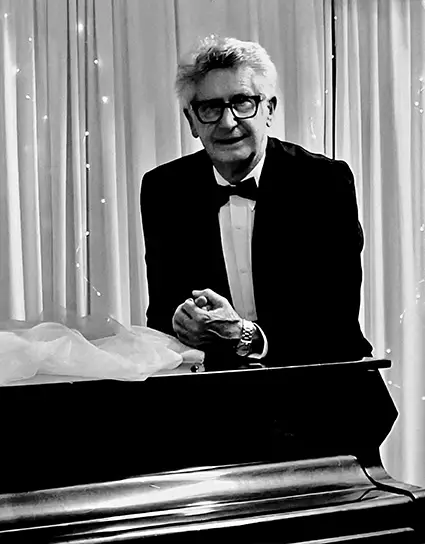
I didn’t know The Narcs when they were in Christchurch. The early 80s were a time when I was doing a lot of session work in Auckland.
I went to the States a few times, touring in Canada, around Asia and Australia with various line-ups as a session keyboardist – with Roger Fox, Suzanne Prentice, country shows, all sorts of stuff.
I met the guys from The Narcs in 1983 when they were playing at the Esplanade Hotel in Devonport where I was living between tours.
We hung together; I had heard about their legendary gigs at the Hillsborough in Christchurch where they were regularly playing to 800 people on Friday nights.
I met them in 1983 just before I was going on another tour to the States with Roger Fox’s Big Band.
I got a telegram from the Narcs while I was in Arizona or Texas, I can’t remember, but one of those places. They asked me if I would like to join the band when I came back to Auckland.
They were a three piece up till that time. When I joined, I added keyboards – they became a four piece. And it was a big change for them. I was never sure about the name. They took the name The Narcs because originally they were doing lots of songs by the band the Police. They were a covers band.
It seems a little ironic that they had already transitioned from being a covers band to performing originals, yet they didn’t originally have a keyboardist in that line-up. You completely transformed their sound.
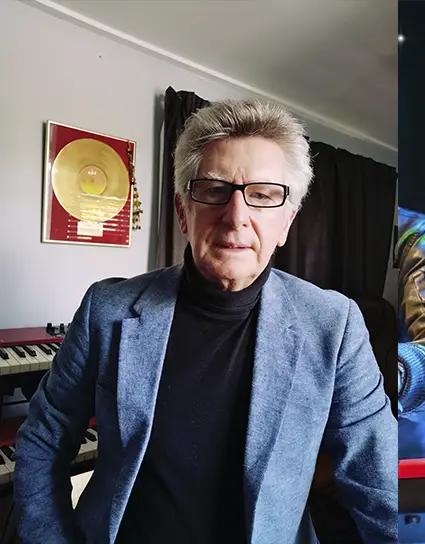
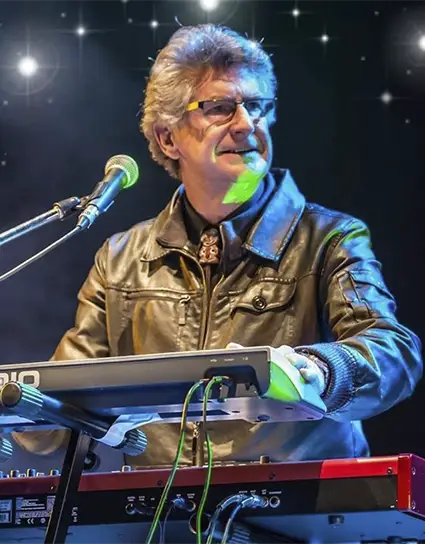
When I joined the band, I brought keyboards into the mix – in particular, synthesisers and Hammond organ – and it changed the sound of the band. It became much more synth orientated. It was the flavour of those years, if you think about bands like Tears for Fears, Duran Duran and in Australia Ice House and people like that getting into that big synth sound. It was good for radio.
Our big hit at that time was ‘You Took Me Heart and Soul’, in 1984. And after that, ‘Diamonds On China’, plus a few other singles we had. That big synth sound mixed with Andy’s very strong Australasian rock guitar sound. And it was very successful for us for a while. Though the punks and Flying Nun bands hated us for being mainstream! We were signed to CBS at the time. Our first album, The Great Divide, went gold. Then we recorded a second album in 1986 and toured in Australia with Midnight Oil. So that’s when ‘Diamonds on China’ came out. We won the APRA Silver Scroll Award in 1986 . We won lots of awards around that time. And I guess it was that blend of Australasian rock and that big English synth sound that really created The Narcs sound for the 1980s.
Was there a particular moment when you thought “Woah, I’m a rock star!”
Maybe when we were featured in the Woman’s Weekly! We had sponsorships and we were doing very well for ourselves for a while there, I guess. Opening for Queen, opening for Elton John, being on tour with Midnight Oil, There were moments where I just thought, wow, I’m lucky to be doing this, meeting these amazing people. To be honest, I was more interested in being a great musician .
What prompted the decision to disband in 1990?
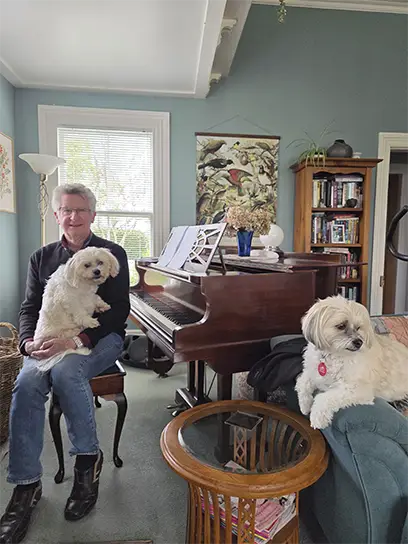
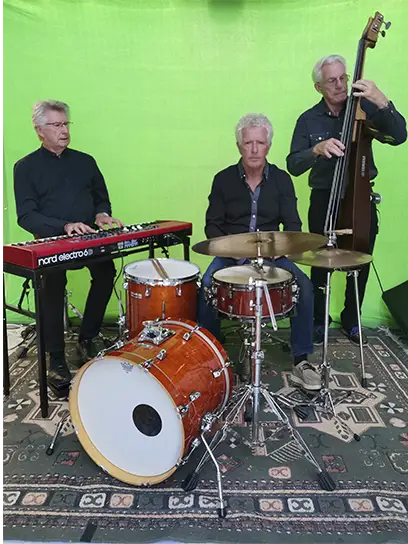
By the 1990s, having kids meant coming off the road – we were all having kids – it was just too hard with a family.
And also I was getting into teaching. I took up studying and found myself helping set up the media arts music degree course at WINTEC in Hamilton. That was a huge thing for me. I kept studying and eventually did my master’s and really got into music as an academic pursuit – my master’s thesis was on the rise of Afro American music in Christchurch between 1960-1970. I guess these days I’d call myself a musicologist as well as being a practising musician .
What have you been doing since then?
I’ve been doing lots of things, lots of music, but a lot of it has been around teaching. I’ve set up lots of courses across the country. The media arts degree in Hamilton, a performing arts diploma in Tauranga called Te Kamakama. I worked down at NMIT in Nelson and helped them establish their music department down there. And eventually I ended up managing the jazz and music theatre degrees at ARA in Christchurch – I was managing 30 staff and 300 students across two degree courses.
And that really took up a lot of my time – and got me away from performing. In 2015, after the earthquakes in Christchurch, I wanted to get back to playing – so we moved north here to Waihi … back into the scene where I’d been in the early 80s. It’s been a great 10 or 11 years in the Mighty Waikato.
Why Waihi?
We had been living in Diamond Harbour in Christchurch before moving here, and we like the idea of the mountains wrapped around us and being close to the sea. So when we were moving north, we looked for a place that had a similar kind of feel and that’s where Waihi really worked for us.
What do you love most about the area?
I really dig the Hauraki landscape, the mountains, the sea, the skies, the rivers. That’s a big draw for me. I feel very connected to the whenua (land) here. I find it very inspiring creatively and also good for my well-being. Being in nature seems to be something that really helps me keep my spirits up, and inspiring.
I have found a really good, nice community of people here in Waihi and around the area. It’s an amazing area. The climate’s good. It’s been a really cool place to land.
You’re doing a lot with local musicians and songwriters. Tell me about Air Sculptures.
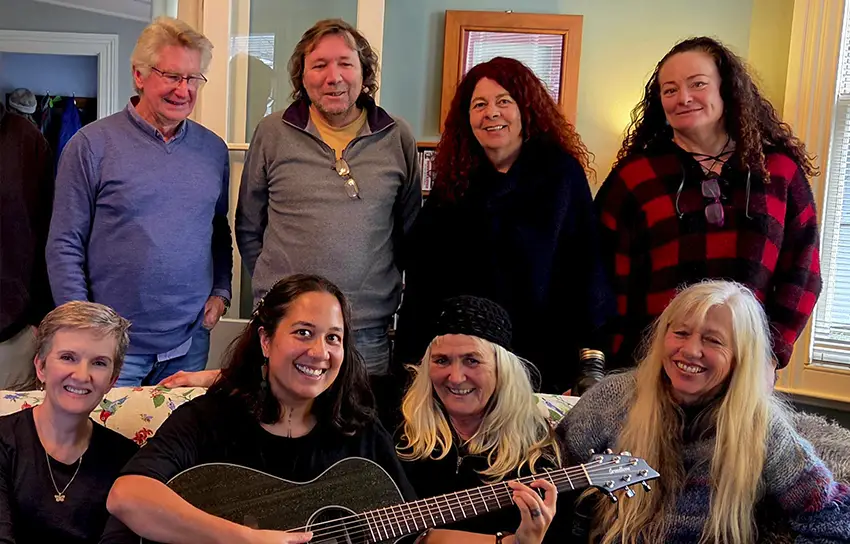
I’ve established a songwriting group called Air Sculptures, which is based around the idea of songwriting as a daily personal practice – the idea of actually taking pen to paper and writing songs. I’m in the studio most days and I’m either writing songs or working on compositions. Air Sculptures has been a really great project. I have found a bunch of people who really encourage each other to write. I’ve been working with about 30 or 40 songwriters over the last two years, since the summer of 2025. We have created a kind of a group environment where people can workshop their songs, critique each other’s songs and perform on each other’s songs. So it’s been a cool thing to do.
And you have your own recording studio.
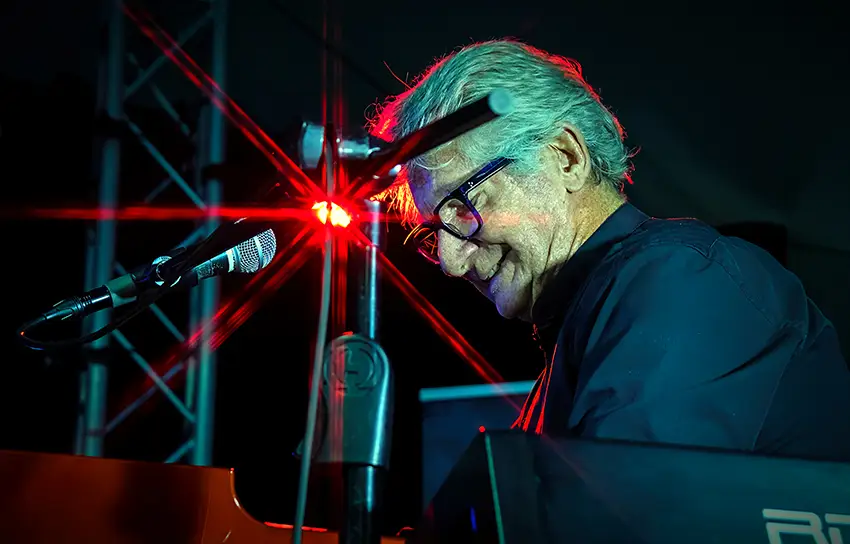
Yes, I have a little recording studio at home. It’s like a little two-man submarine. With the technology, everything is computer based, so I find I can get really good results even in this small space. I find it a really relaxing and a peaceful place to be. I can do most things up here, from replicating the sound of a symphony orchestra right through to getting down and dirty with some funk and R and B and everything in between.
I’ve got musicians I work with at a distance – in the UK, the States and in Australia and up and down Aotearoa. So working in the provinces is not a problem for me. Technology has made this lifestyle possible for me. I guess I’m living an artist’s life.
It’s nothing like the rock star days of the 1980s. But it’s been a great way to age gracefully and make some music that’s really meaningful – creating a legacy for my kids and my grandchildren.
Do we get to see you performing these days?
I am still performing these days. Last year I was playing with seven different bands, ranging from The Action based out of Paeroa through to Midge Marsden’s band and The Flaming Mudcats in Auckland and Lucky Strike, which is the little jazz trio that I’ve got based in Waihi.
I’m also general manager of the National Youth Jazz competitions and that’s a year-long project for me. This year we had 900 kids involved at Baycourt Theatre in Tauranga over Easter – 29 big bands, 64 combos – 42 different schools. That’s a big job. I also sit on the board of SAE, which is an international school of audio engineering based out of Auckland. They’ve got campuses around the world.
I like to keep on top of things and keep abreast of what’s happening in music technology. And yeah, I get called on by a lot of people to do a lot of different things music-wise and arts-wise. I guess you’d call it a good life.
Supported by Rob Holding
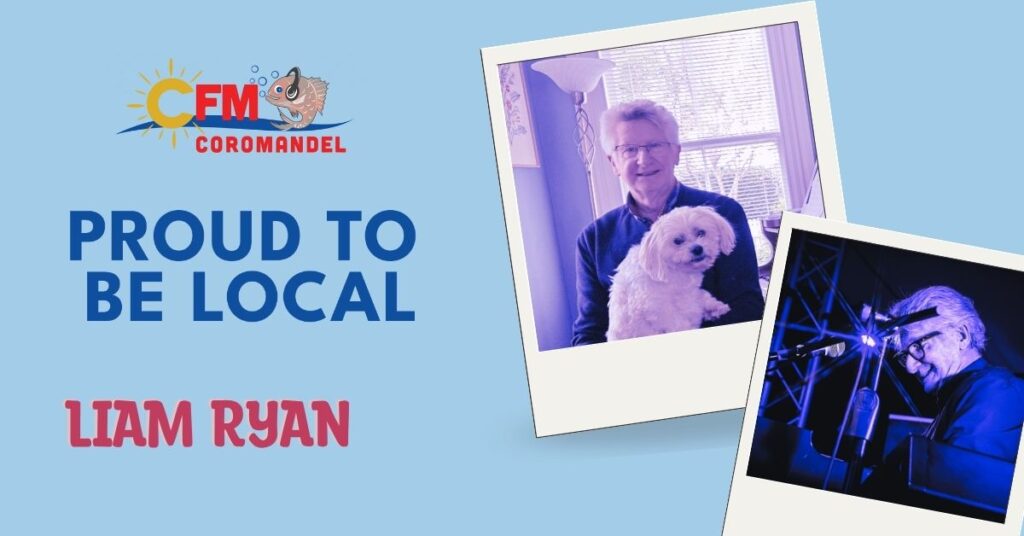
PROUD TO BE LOCAL — BROUGHT TO YOU BY CFM — IS OUR INSPIRATIONAL FEATURE, HIGHLIGHTING COROMANDEL PENINSULA FOLKS DOING WONDERFUL IN OUR COMMUNITY.

Coromind: Coromandel’s Collaborative Magazine

Help us take Coromind Magazine to new heights by becoming a member. Click here
Change the Weather for Your Business: Advertise with Us.
Advertise your business in the whole Hauraki Coromandel in the coolest Coromandel Art Magazine, from Waihi Beach/Paeroa /Thames up to the Great Barrier Island.
Advertise Smarter, Not Harder: Get in Touch