… Unless Followed by a Loud Bang
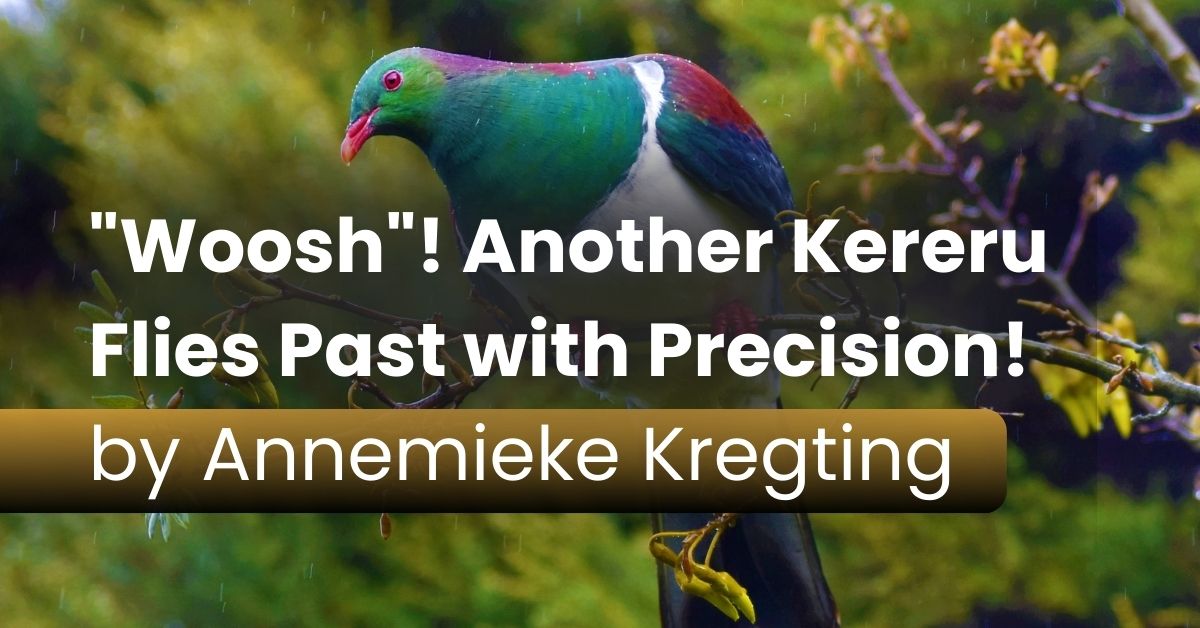
How much do we know about our native pigeons (Hemiphaga novaeseelandiae – known as kererū)?
They are important seed dispersers. Since the extinction of the moa, kererū is the only bird species big enough to swallow large fruit, such as those of karaka, miro, tawa and taraire, and disperse the seed over long distances. The disappearance of these birds could be a disaster for the regeneration of our native forests.
Nationally, the kererū population is considered to be stable but its numbers are gradually declining.
Kererū are large birds and can measure up to 51 cm from tail to beak, and weigh about 650 grams. No wonder that, when they hit your window, they can do serious damage to themselves.
Kererū have an extremely disconcerting habit of suffering from impact injuries – being hit by cars while flying low (often fully laden) across roads or flying into windows or glass balustrades.
Window strike often occurs when birds perceive a LINE OF FLIGHT through one window of your home and out another. This also occurs on buildings with corners made of glass or when birds see SKY or TREES reflected in your windows.
This may occur on certain windows or areas of a window based on the season, time of day, or orientation to the sun.
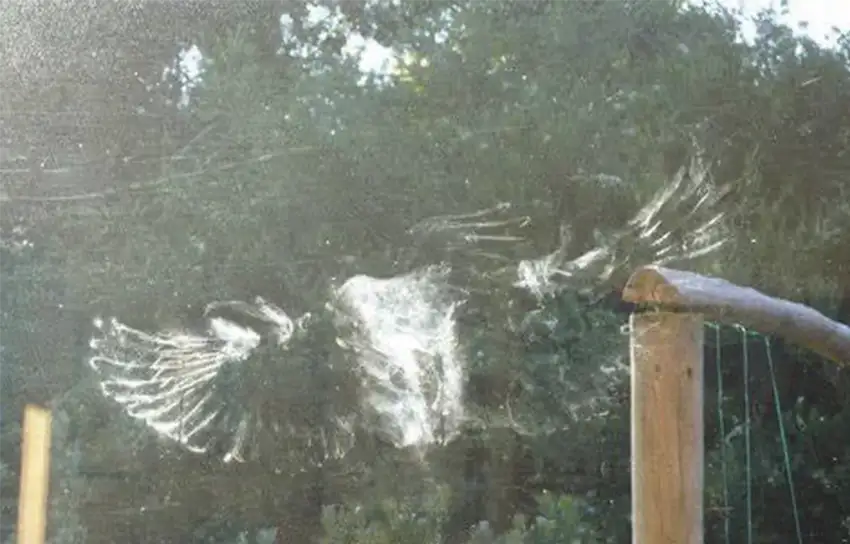
Interestingly, flight speed and force calculations suggest that a 570 g kererū would collide with 3-70 times the force that smaller birds (5-180 g) would. This may explain why the injuries observed in kererū differ from those in smaller species of birds.
While smaller birds can sometimes just take off after being stunned, window collisions in kererū have far more serious injuries.
Impacts usually cause trauma to the head, fractured beaks, fractures or dislocations of the coracoids and clavicles, and ruptured internal organs. Fractured coracoids can damage flight muscles and rupture the heart. Additionally, extensive bruising of pectoral muscles and lung haemorrhaging occurs due to the force of impact.
Kererū on the ground that can be approached, but look fine on the outside, are rarely just stunned or resting. They often have injuries and can therefore be predated on by cats, dogs or mustelids unless rescued and taken into care.
During Lockdown in 2020, we admitted well over 35 kererū in one month, and sadly not all of them made it back into the wild.
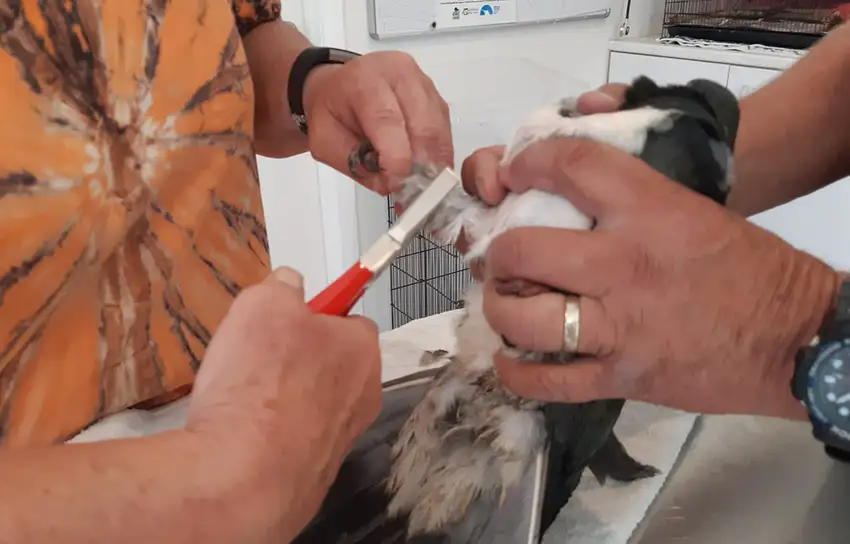
All kererū were first stabilised after arriving; once first aid and pain relief had been administered, they were taken to the x-ray department at the Whitianga Vets. A correct diagnosis was important to make a recovery plan. Often we would consult Massey University Wildbase, sending them the x-rays to get a prognosis.
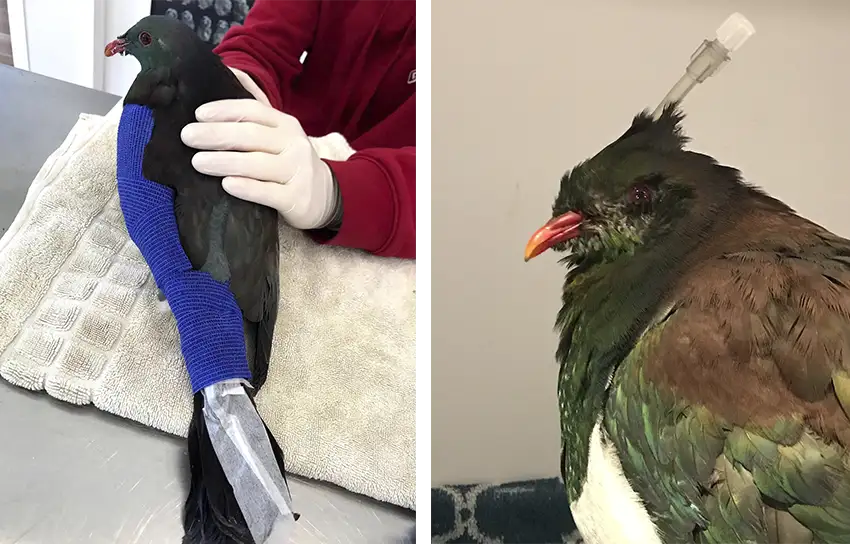
Most needed bandages to stabilise a fractured wing or shoulder, repairs to a ruptured crop (food holding pouch), beak repairs or just cage rest.
Caring for kererū isn’t simple. The appropriate type of housing, food and care is very specific for each species of bird.
Above is ‘Hamish’ (always named after the rescuer, for easier identification) who flew into a window and suffered a fractured lower jaw. Under anaesthetic, a tube was inserted through the skin into the crop so we could feed Hamish with liquid food while the jaw was healing. Hamish made a full recovery and was released after two months.
Kererū were often long-term patients, as their injuries tend to be significant and take time to heal.
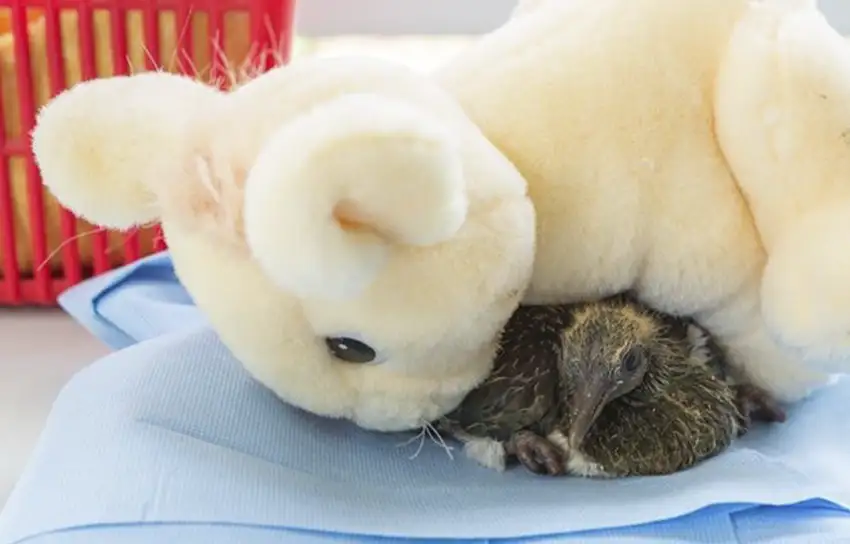
Our criteria for release were:
- Courses of medication and treatments were completed and injuries had healed.
- The bird was observed to be flying properly, and able to gain vertical lift.
- The bird had a good body weight and body condition.
- The feathers were in good condition.
- The bird was physically and behaviourally able to fully function in the wild, and was not imprinted on people.
After release from Kūaotunu, some would stay around for some time. We would leave food out for them until they disappeared. Two kererū were released together where they were initially found (more than 90 kilometres up north) and in the following days, both of them were back in our tree. That told us to just release them here as they fly great distances and will find their way anyway. All native birds received a certified DOC band with a number registered with the DOC banding scheme, so we could always identify them if they got into trouble again.
We have many stories and hold memories of our dear kererū over the years.
When you find an injured bird, call the DOC hotline 0800 362468 for instructions.
Annemieke collaborates with Coromind magazine, sharing inspiring pieces about local birds and wildlife. You can find one of her articles in our Issue 13 (‘Bird Rescue SOS – How to Assist Baby Birds in Distress’)
Additionally, you can listen to Annemieke’s chat with the ALTBAYS Table Talk podcast team. Go to YouTube or your favourite audio platform and search for: Annemieke Kregting (Kūaotunu Bird Rescue Trust) – ALTBAYS Show #124.
Words by Annemieke Kregting
Coromind: Coromandel’s Collaborative Magazine

Help us take Coromind Magazine to new heights by becoming a member. Click here
Change the Weather for Your Business: Advertise with Us.
Advertise your business in the whole Hauraki Coromandel in the coolest Coromandel Art Magazine, from Waihi Beach/Paeroa /Thames up to the Great Barrier Island.
Advertise Smarter, Not Harder: Get in Touch