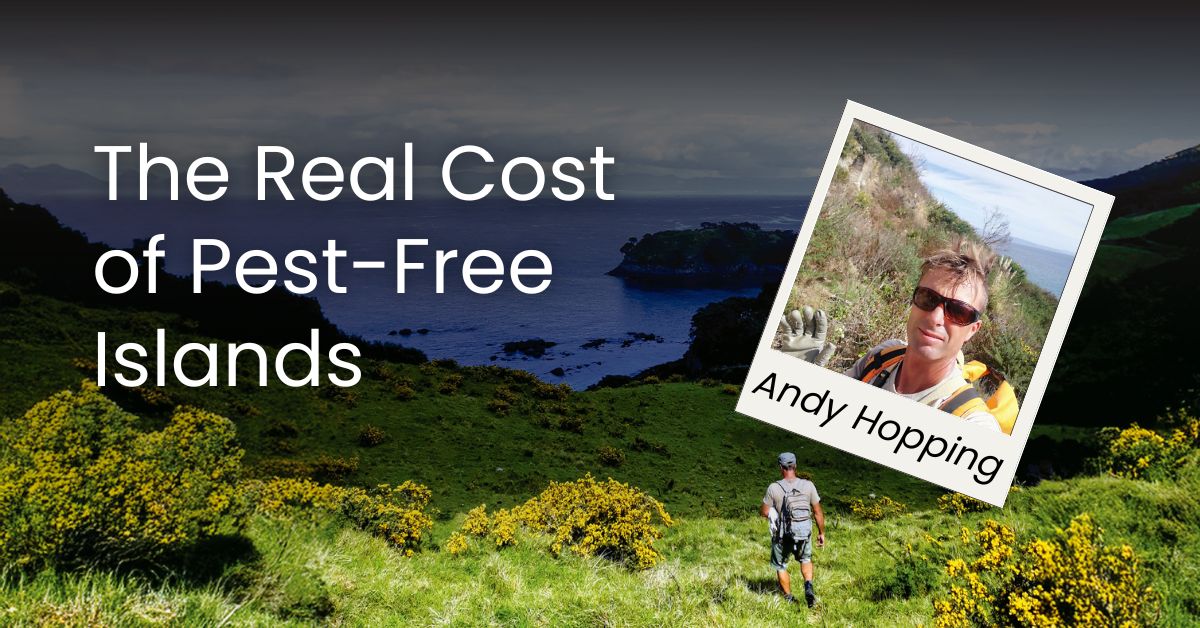
Ahuahu & Andy Series: The broader challenge facing Great Mercury Island
The major pest eradication on Ahuahu / Great Mercury Island in 2014 was a public/private project.
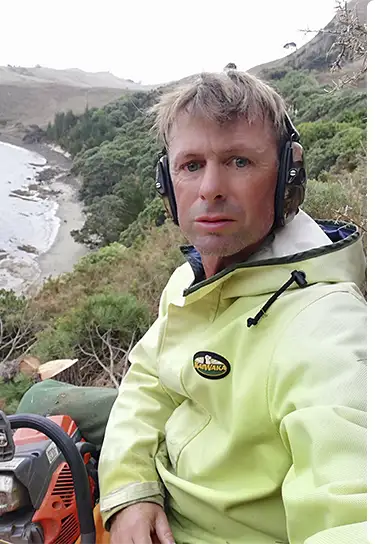
I was then employed directly by the Island; the island paid my salary (funded privately) to ensure that the multi-million-dollar investment that had been pumped into the restoration project over a period of a few years was protected by someone dedicated to just that job. There is still to this day a full-time ranger employed to maintain the pest-free status.
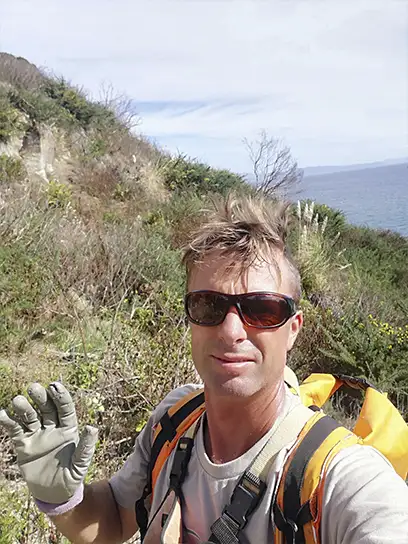
Just to be clear, a privately owned pest-free island with public access is a forever commitment of hard work, worry and cost. In this case, the risk almost entirely comes from human interaction between the island and the mainland via boats.
DOC doesn’t have the ability to follow through with that long-range commitment, but it was a partner in the eradication process and the post-eradication settling in process.
The science, passion and logistics by specialists in island restoration brought forward under the DOC umbrella was critical to even contemplating such a huge undertaking.
The people on the ground planning and undertaking that work were exceptional, their experience harking back to the time of the Forest Service’s goat hunting and groundbreaking firsts in Island restorations, Korapuki Island. They were practical, pragmatic and experienced and often seemed to be let down by the upper management decision-making of DOC processes and restructures, going all the way to central government.
For the future pest-free management of Ahuahu / Great Mercury Island, the owners are responsible for managing the pest-free status of the island, home to translocated species; the well-being of such translocated species is monitored by DOC.
The seven islands known as the Mercury Islands are nature reserves and are internationally significant; they are within the World Heritage Site spectrum. They are hugely important ecologically and sadly this is not made common knowledge out of fear of promoting poaching of rare and endangered species for international trade. I personally disagree with this strategy; I feel it is counterproductive, education being a much more productive and value-laced strategy. Without education, we sort of see people stumbling around unaware of the damage they could do or the potential for the future. You won’t hear much from DOC about the true significance of those islands, in order to protect them; you are more likely to get a ‘check your boat for rats and mice’ message.
Great Mercury Island is a feeding and breeding habitat for birdlife four times larger than all the other islands combined. It offers safe and usable land available to native birds, migratory seabirds and future translocatable species. It also is the only island where the general public are allowed ashore and can experience this kind of birdlife. It acts as a safety buffer between the mainland and the other islands. It is a great gift. From my place on the ground, it made sense.
In New Zealand, because of commercial priorities, we are vulnerable to becoming a country that risks having only hand-reared kiwi. These birds are a symbol to be proud of, the apex of New Zealand wildlife. To sustain kiwi, which are apex, there must be a healthy forest; basically, everything else underneath the kiwi forms the ecosystem the kiwi represents and needs to survive. It isn’t about the kiwi itself, so much as the healthy habitat each breeding pair requires. The islands are safer than the mainland, really the only defendable habitat against our mainland drive for commerce, trade and internet shopping; they are home to many of our endangered species for this reason.
Future pest-free management is very much a long-term plan looking forward 100 years and it asks the key question: How can this island, these islands, be protected and maintained under the ever-increasing social pressure they are now coming under, caused by subdivision development for baches and some residential housing in Whitianga, Matarangi and Cooks Beach? This introduces a much greater and largely non-resident snatch-and-grab style of boating experience fuelled by the business association being focused on getting bums on seats.
When I look ahead 50 – 100 years, the most valuable asset I can see in a fiscal sense will be the rarity of well-preserved islands and the sea around them and the shared knowledge of what those islands actually represent.
I hope the developers slow down and educate new home buyers. I hope businesses can see value further into the future beyond cashflow and that we can hold our taonga high up on a pedestal respectfully, where they should be.
These stories and observations are humbly the author’s only, they don’t represent anyone else’s point of view.
Words by Andy Hopping
Coromind: Coromandel’s Collaborative Magazine

Help us take Coromind Magazine to new heights by becoming a member. Click here
Change the Weather for Your Business: Advertise with Us.
Advertise your business in the whole Hauraki Coromandel in the coolest Coromandel Art Magazine, from Waihi Beach/Paeroa /Thames up to the Great Barrier Island.
Advertise Smarter, Not Harder: Get in Touch