Music is always moving
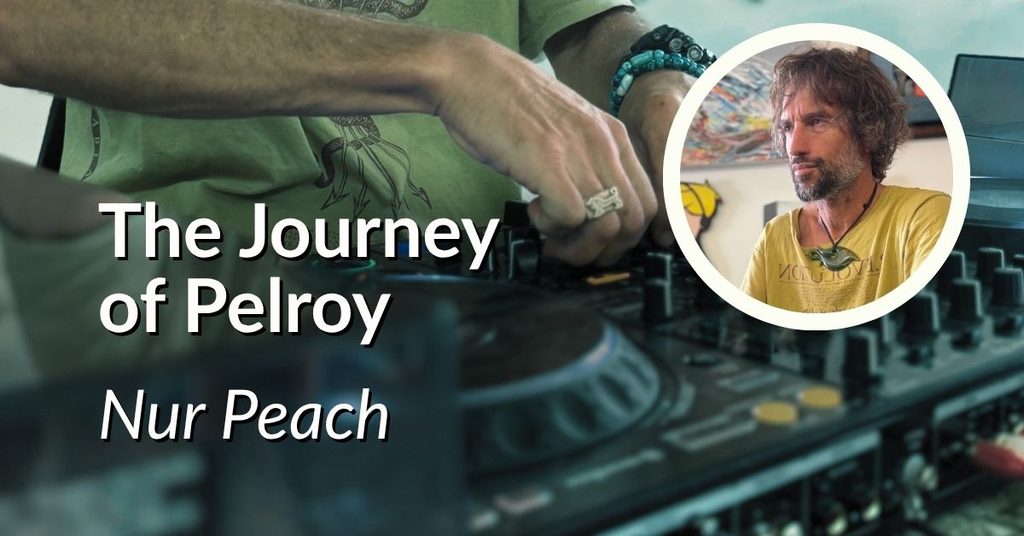
Peter Matai Johnston is known variously as Pelroy, Dubious Bare, and MC Ising. Some may know him for his multi-media art, or for haunting local surf spots, but Johnston also has a deep affinity for and involvement in music. The singer-songwriter, multi-instrumentalist and DJ’s reggae-infused grooves and soulful voice have taken him exciting places.
Growing up in Kūaotunu, in the same house where he lives today, Peter Johnston was born into a musical family.
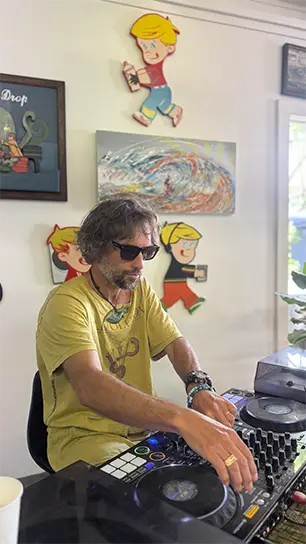
“My father, Peter Tiki Johnston, was a complete axe head, noodling on the guitar almost every day, from an early age. He played in bands before I was born. That’s how he met my mum, who’s also a musician. She became the singer in their band, whilst he played guitar and inserted peculiar backing harmonies. A lot of the rehearsals were at our house (when I was) growing up. They would gig a lot, and were the resident pub band during the 70s and 80s in Whitianga, often playing at the Whitianga Hotel and the Whitianga Club. I spent a lot of time in the backseat of cars in gravel car parks till closing.”
With music so prevalent in his home environment, it’s not surprising that Johnston found himself singing along to songs from an early age. He recalls two songs that had a particularly strong influence on him as a child.
“Bob Marley’s “Could You Be Loved” had a real catchy rhythm. It’s a disco beat, which is really odd in comparison to the rest of Bob Marley’s music. The other song was by an artist named Juice Newton called “The Queen of Hearts”.
I can remember tearing through our garden at 5 years old, singing the lyrics. It’s still a catchy tune to me, and whenever I hear it, it takes me on a real nostalgic journey. I never really listened to any more Juice Newton after that, but I got heavily into Bob Marley later, and the whole reggae movement and dub.”
Johnston became involved in Mercury Bay Area School productions from 10-13 years old, often taking a lead vocal role. Following that, he got more seriously into music, performing in school bands with another notable Whitianga music personality, David Rhodes.
Johnston wrote his first complete song, titled “Karma”, when he was 15, and later, performed it in venues nationwide. At 16, entering a karaoke competition judged by members of prominent local band Castle Rock provided a lucky break of sorts.
“Some of my friends talked me into it. I entered, and I found myself getting further and further through the competition, all the way to the final, and then ended up winning it. Castle Rock were about to go on tour, and asked me if I wanted to join their band. And so, I just made a snap call, I left school and joined their band!”
The band, fronted by Dylan Wade Lajunen and including Bruce Peachy and Chris Smith, embarked on a tour of the South Island.
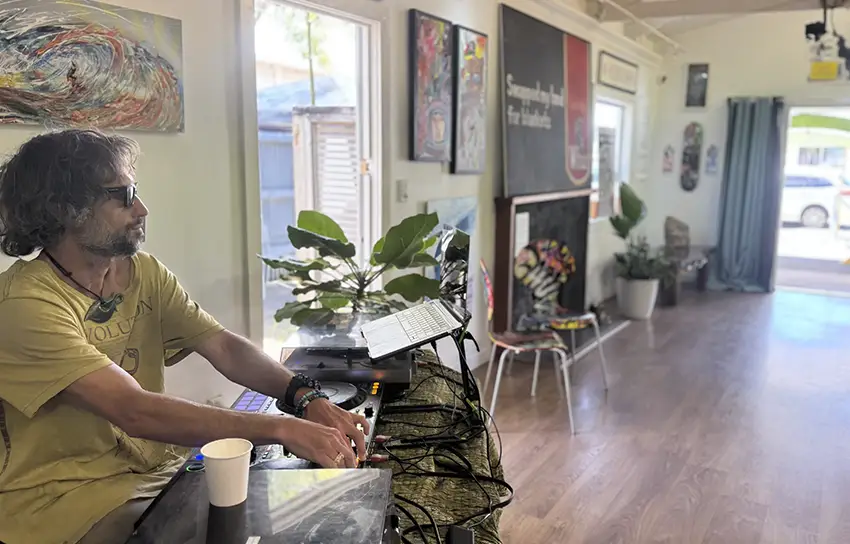
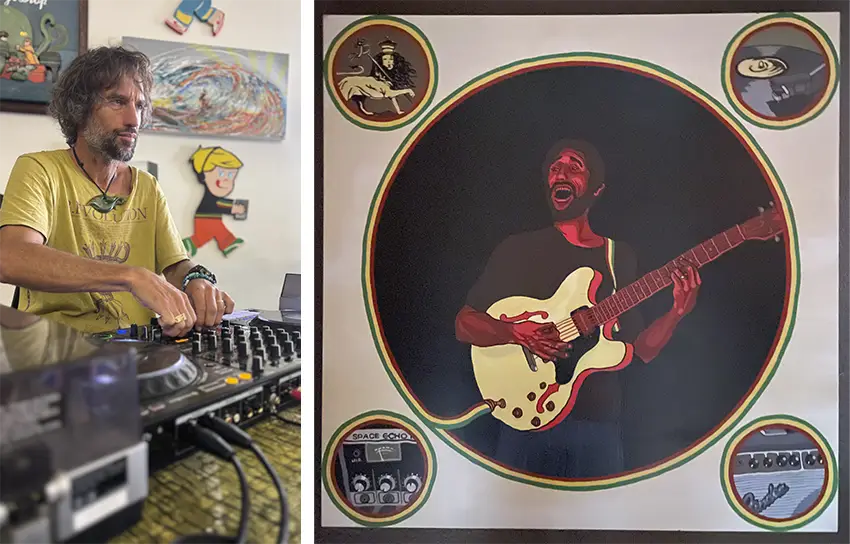
“We all had very different influences, and brought that all together, and somehow it worked. They were some of the best years of my life, and really opened my eyes to what playing professional music looked like. I’d only seen it from the dancefloor, and from sitting in the car outside, waiting for my parents to finish! But being on the other side of the stage, I was like: ‘Actually, this works, this is quite good, getting paid to do what you love!’ The money was never great, but it was enough to get us to the next gig with a bit more left in your pocket, and you can’t put a price on the experience, the music and the camaraderie. We toured the west coast of the South Island, all the way to Queenstown, and as we got further on, we started gelling more, and by the time we got back, we were like: ‘That was epic! We should do that again!’ We swapped drummers out, enlisting local skate legend, Mark Neighbours, and we did another tour of the South Island, and that was premium.”
Following the second tour, Castle Rock disbanded when Lajunen embarked on extended overseas travel. Johnston visited Germany, then settled in Dunedin, where he became the vocalist for the reggae collective Zuvuya. He fondly recalls meeting his bandmates.
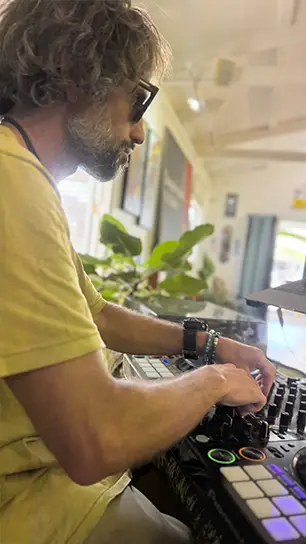
“There was a busking competition, and there were different people playing, and then these two guys got up and played. One had two congas, and one had a djembe, and they just shredded the place up with tribal Nyabingi, Jamaican, African drumbeats. And I was like, wow! These guys are incredible. They were Peter Hill (AKA Inspector Ital) and Matt Eddy (AKA Fat Eddy).
I bumped into Matt later that day. We’d both grown up with similar influences, and we really connected. He had a music studio in his house, overlooking the harbour at Pūrākaunui in Dunedin. He introduced me to all this reggae I’d never heard before, which influenced my musical tastes greatly.
I played a couple of my songs to Matt, and we started recording them. We found the rest of our line-up when we went to see a Bob Marley cover band called Grass Roots at the Empire Tavern in Dunedin. Alistair Wait (AKA King Al) was the bass player. The drummer was a legend by the name of Jarney Murphy, hardest working drummer in showbiz. Matt basically approached them and said, hey, you need to come and play in my band. I started singing with them, and the band got a new lease of life and started moving.”
Zuvuya saw a fair bit of success, billing alongside NZ icons such as Salmonella Dub, Shapeshifter, Rhombus, Fat Freddy’s Drop, Trinity Roots, Cornerstone Roots and The Black Seeds. A defining moment was opening for the legendary Jamaican producers Sly and Robbie at Auckland’s St James Theatre. After three years, Johnston left the band and moved back to Whitianga. In the last few years, his music career has focused on DJing bush doofs under the alias Dubious Bare.
“I’ve got quite a large selection of reggae and dub on vinyl that’s basically 1969 to 1981, which for me is the golden era of reggae. It’s the height of the rockers movement. Rockers is the style of reggae that I enjoy most. I also built a music collection of jungle and drum and bass that I DJ too. It’s having a real resurgence in popular culture. Drum and bass is quite big at the moment, again. Jungle’s always been there, it’s a bit of a subculture that comes and goes in popularity. Music’s always moving, returning back and referring to itself.”
Credit Artwork: JUDE ANTHONY CALDER
Words by Nur Peach
Coromind: Coromandel’s Collaborative Magazine

Help us take Coromind Magazine to new heights by becoming a member. Click here
Change the Weather for Your Business: Advertise with Us.
Advertise your business in the whole Hauraki Coromandel in the coolest Coromandel Art Magazine, from Waihi Beach/Paeroa /Thames up to the Great Barrier Island.
Advertise Smarter, Not Harder: Get in Touch