A very stinky strategy?
If you picture a fearsome bird, your mind may jump to the New Zealand Falcon or the Australasian Harrier. But how about a seabird? The Giant Petrel is the largest of all petrel species.
Both the Northern and Southern Giant Petrels breed in New Zealand, though they spend most of their lives roaming the waters around the Antarctic continent and the subantarctic islands.
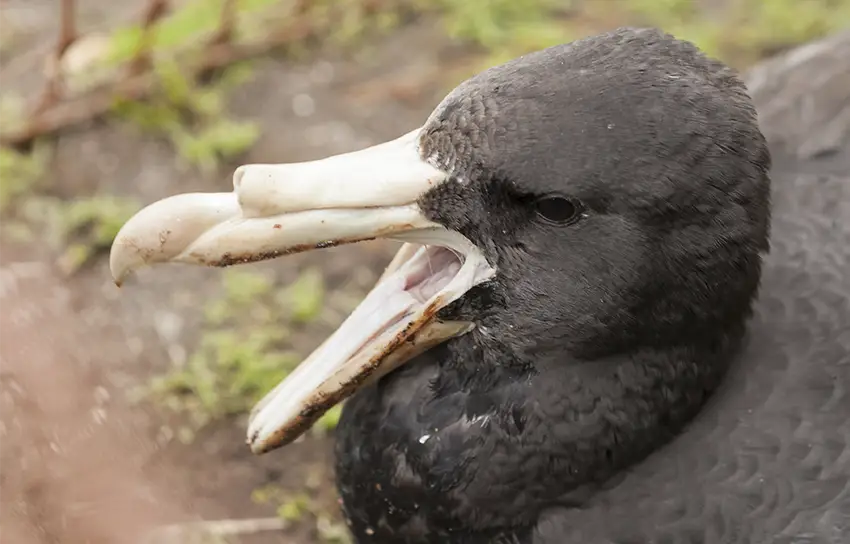
Similar in size to an albatross, they are distinguished by their heavier, more powerful bills.
Those powerful tube-nosed bills have an excellent sense of smell to help them locate food across enormous distances.
Their nicknames – Smelly Nelly or Stinker – are well earned. Chomping down on a dead whale, seal or penguin is enough to deserve that name, but when threatened these birds will regurgitate their stomach contents, repelling anything that approaches them.
A very stinky strategy?
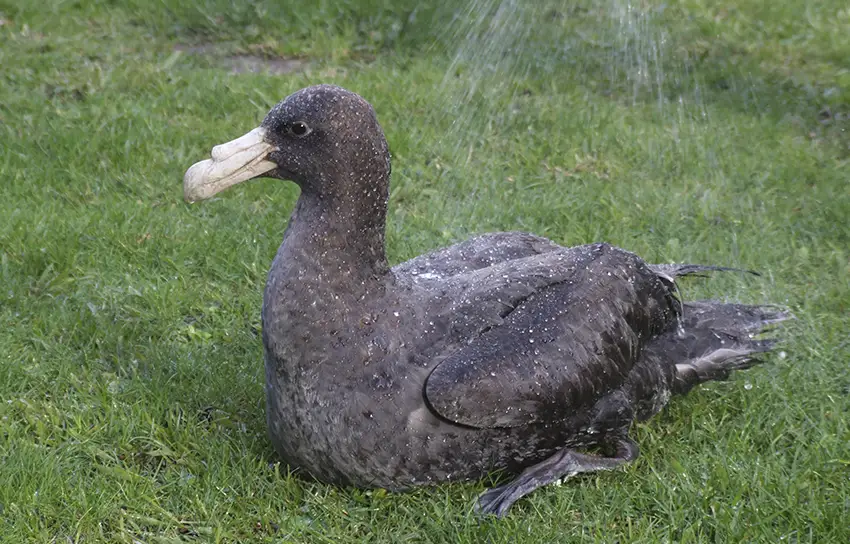
Over the years of running a rehabilitation centre, I have cared for many of these impressive birds. They are often found inland after being blown off course, and upon rescue, they receive a full physical examination and blood tests.
These frequently reveal malnutrition and dehydration, which can place significant strain on the kidneys. Intensive care is then required, including fluid therapy and carefully managed tube feeding to avoid refeeding syndrome – a dangerous condition caused by introducing whole foods too quickly after a period of starvation.
Handling a bird with a wingspan of up to two metres and a weight between 3.8 and 5 kilograms is never a one-person job. Despite their size, Giant Petrels in care are usually calm, though undeniably cheeky. Feeding times required particular care, as toes and heels were always at risk of an opportunistic nip.
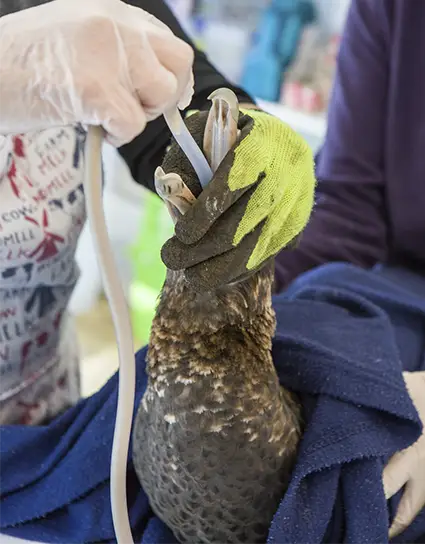
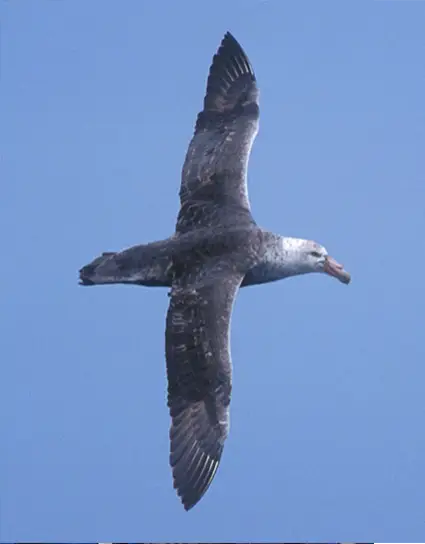
After several weeks of rehabilitation – and many kilos of raw meat and fish – we assess the bird’s feather condition to ensure it is fully waterproof and confirm it has regained a healthy body weight. With support from the Department of Conservation, each bird is banded and registered with the Wellington Banding Office before being released near a cliff or open stretch of sea, ready to return to its vast ocean home.
If you have found a sick or injured bird, please call DOC’s Emergency Hotline 0800 362 468 for further instructions.
words by Annemieke Kregting
Coromind: Coromandel’s Collaborative Magazine

Help us take Coromind Magazine to new heights by becoming a member. Click here
Change the Weather for Your Business: Advertise with Us.
Advertise your business in the whole Hauraki Coromandel in the coolest Coromandel Art Magazine, from Waihi Beach/Paeroa /Thames up to the Great Barrier Island.
Advertise Smarter, Not Harder: Get in Touch