The Freedom to Believe, the Freedom to Question
Continuing on from Part 1, where I described the restrictive life of some friends who disappeared down an evangelical Christian rabbit hole for a time, I remember another group of friends who became part of the so-called Divine Light Movement in the 1970s. It was led by a chubby Indian teenager at the timwhoe called himself Guru Maharaji Ji. My friends and flatmates, Pete and Sally, had become devotees and practised the various forms of meditation he preached. They came to live with me after gifting their house to the guru’s movement. Gifting of material assets was encouraged by Maharaji Ji. This enabled him to lead a somewhat flamboyant lifestyle, enjoying fast cars and extensive international travel. Apparently even his mother accused him of being a playboy. Living with Pete and Sally was sometimes frustrating. They struggled to pay the rent and didn’t seem to be particularly happy but were adamant that the decision to gift their house had been the right one. It left me wondering how financing a young Indian guru’s material lifestyle could help with one’s own spiritual development. Was it another example of followers who needed a leader, and a leader who happily obliged them?
The next cult-like organisation that I encountered was Centrepoint, a community in Albany that was established by psychotherapist Bert Potter. Members had to sign over their material assets to the community, which soon attracted a large following. The group thrived for a number of years, but unfortunately, Bert’s teachings through what he called ‘encounter groups’ eventually lead to lengthy prison sentences for Bert and some of his most faithful followers, having been found guilty of child abuse and illicit drug charges. I visited friends at Centrepoint a couple of times and often wondered why they would hand over control of themselves, their children and their assets to a man who some described as an extremely autocratic leader.
During my time as an ESL teacher, I came into contact with Muslim students mostly from Saudi Arabia. Nearly all were lovely people and only one ever tried to push his ideas of Islam on me, by giving me some literature to peruse. I read it, of course but the literal laws and punishments for disobeying them seemed a bit extreme for my peace-loving mind. Just as in Christianity, where Jehovah of the Old Testament reportedly killed millions of disobeying humans, Islam has its fair share of extremists and extreme teachings. There are good Muslims and others who would like to impose sharia law onto unwilling populations – just as there are good Christians and others who support genocide in the Middle East, some of whom are praying for the so-called rapture and the war of Armageddon, an event which will apparently cause rivers of blood to flow across the land, before the ‘true’ Christians are saved, which doesn’t really sound like a Sunday picnic for the rest of us. Is it any wonder that, for me, it would be very difficult to join even a very moderate branch of either religion?
One such moderate group I encountered were the Pacific Island Christians in Fiji, Samoa and Tonga. In these idyllic places, Christianity forms the basis of society. There is a church in almost every village and Sunday is indeed a day of rest. On some islands, we weren’t permitted to surf on Sundays, while the mandatory church services were often followed by large feasts of pig on the spit, other local and imported food. Unfortunately, the imported food differs from the traditional fare in that it often includes extremely fatty, low quality meat products from New Zealand and Australia and processed food laden with sugar, salt and unhealthy fats, both of which contribute to the widespread obesity prevalent in many of the islands.

Twenty years ago, in Samoa, I met an American doctor who was trying to tackle the obesity epidemic. It was an attempt to alter the harmful diet and reduce the consumption of the unhealthy imported food that had become a staple. I asked Doctor Ken how his project was going. He replied that it was disastrously difficult to change people’s dietary habits in those Christian communities.
He had tried to reach the people through the pastors, ministers and priests who presided over church congregations, to explain to them that changing what they consumed could greatly increase their life span and reduce much of the physical suffering caused by such unhealthy food. Ken said that a common reply by the churchmen was that there existed a degree of ambivalence towards living longer, because the sooner one dies, the sooner one gets to be in heaven and be with God. I couldn’t argue with that logic and I am not sure whether such attitudes still exist but personally I would rather live longer and more healthily than rely on the promise of paradise in a heaven that may or may not eventuate.
I have never met anyone who has come back from the dead to verify such claims. However, most of the islanders I met in the Pacific were very happy, generous people so perhaps quality of life to them was more important than quantity.
It seems ironic that Christian organisations that first came to the Pacific came to ‘do good’, but ended up contributing to the decimation of the indigenous populations by introducing diseases against which the islanders had no immunity. Measles, influenza, syphilis, dysentery, smallpox and others decimated the populations with some islands losing 80-90% of their people.
This undoubtedly made it easier for the Europeans to benefit economically by taking control of land and resources and eventually establishing their own brands of government. While in Hawaii, I heard a phrase that encapsulates the cynicism that some Hawaiians hold towards the early colonisers – “The missionaries came to do good and they did very well indeed.”
While enjoying the singing and general atmosphere of the Sunday services I attended in the Pacific Islands, and recognising the important part the churches play in Pacific societies, and indeed in many other countries throughout the world, I have never been able to commit to becoming a member of any of them. To me, in the twilight years of a very enjoyable life, adhering to a literal belief in scriptures, of whatever sect or religion, written thousands of years ago, interpreted, reinterpreted and translated by fallible humans and used as the guiding documents in the formation of organised religions, many of which believe that theirs is the only way, seems somewhat limiting to my human spirit. For, to believe one might require shunning another regardless of the wisdom it may embody. I would rather leave the mind and spirit free from doctrine, free from the influence of appointed leaders, free to discover life’s lessons and truths from personal experiences at the right places and times, and free to accept the beliefs of others without doctrinal influence or judgement.
Hopefully see you all in nirvana one day, if such a place or time exists.
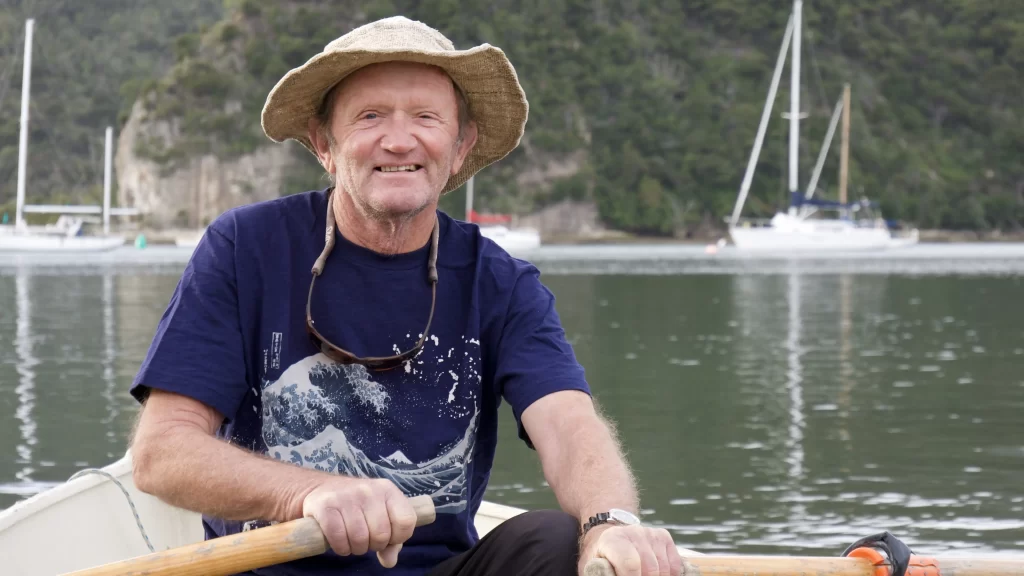
Words by Ross Liggins

Coromind: Coromandel’s Collaborative Magazine

Help us take Coromind Magazine to new heights by becoming a member. Click here
Change the Weather for Your Business: Advertise with Us.
Advertise your business in the whole Hauraki Coromandel in the coolest Coromandel Art Magazine, from Waihi Beach/Paeroa /Thames up to the Great Barrier Island.
Advertise Smarter, Not Harder: Get in Touch