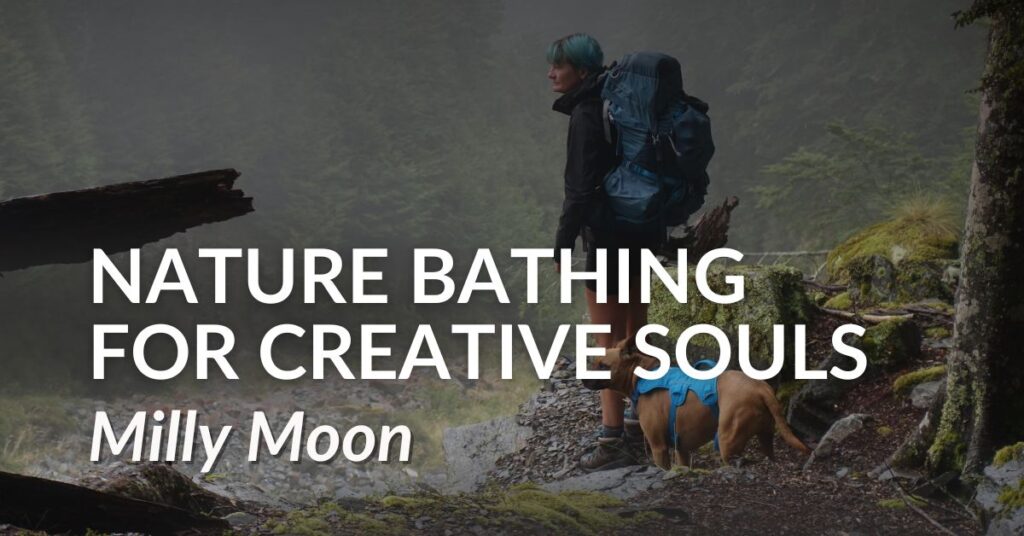
The creative power of stillness in the wild
While some find their best creative inspiration in books or galleries, in conversation or music, I have found it in the grip of the forest, in the embrace of a river’s cold, in the gentle caress of sunlight.
Papatūānuku, Pachamama, Gaia, La Tierra. By whatever name you know her, Mother Earth has always been a clear guide in my creative work, and the only practice I have ever managed to keep consistency in is nature bathing. Walking in nature is meditation for my creative soul and the most inspiring space I can spend time in.
Developed as a meditative practice in Japan in the 1980s, and in response to the increasing urbanisation of Japanese culture, shinrin-yoku, or forest bathing, is the simple therapeutic act of spending time in nature, with the aim to improve well-being.
Certain trees and plants emit essential oils and compounds, easily absorbed by the body when we spend time in their proximity. After studies found beneficial health effects of this absorption in stress hormone levels, nervous systems and blood pressure, Japanese ministry of officials advocated shinrin-yoku as a recognised practice, establishing guidelines and promoting its benefits to the Japanese public.
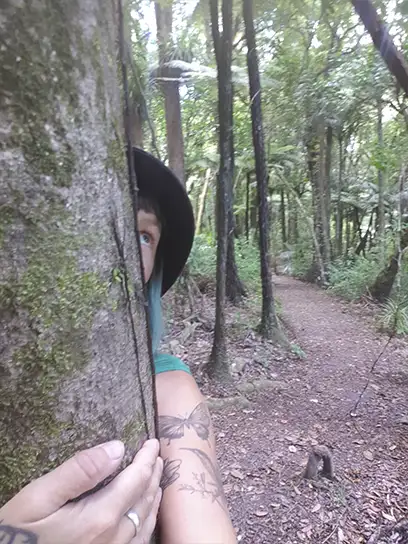
To practice shinrin-yoku, awareness of all senses is required, so put away the devices, walk slowly, intentionally. Breathe deeply of the sweet and pungent earth, kneel to test the ‘squish factor’ of a patch of vibrant moss or wrap your arms around a trunk, feel the porous textures, the insect life moving between skin and bark and listen to the chorus and rhythms.
‘It is clear that our bodies still recognize nature as our home …’ – Yoshifumi Miyazaki, Walking in the Woods.
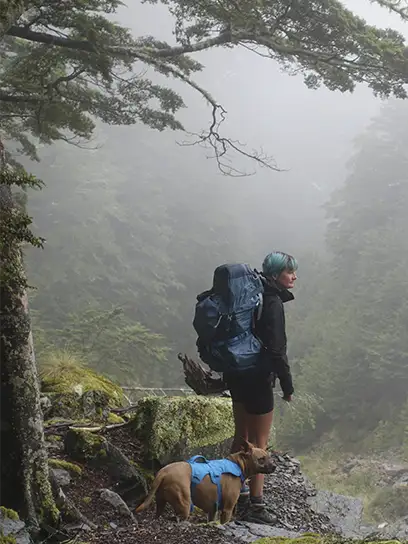
I’ve preferred the company of my hound companion to any others when hiking, so when I tramp, I purposefully choose a time and place where I’ll have a better chance at solitude. Avoiding holiday periods and well known ‘gram-worthy’ destinations, I opt for make-your-own trails over popular traversed routes, though of course even in my day-pack, I carry safety essentials.
Aotearoa tramping is, to date, my favourite tramping ground, and I’ve certainly covered a lot of ground here, even after completing Te Araroa which saw me traverse Aotearoa New Zealand on foot from Cape Reinga (in the far north) to Motupohue (in the far south).
Before I moved to Waihi, I flew from my then-home in Naarm (Melbourne) to spend a short time here on respite. The aim was to boost my mental and spiritual well-being, following a particularly debilitating depressive episode in 2018, and all I did while here was immerse myself in Mother Nature’s spaces.
“Stand still. The forest knows where you are” – David Wagoner, Lost.

Riding the Athenree estuary track on a borrowed bicycle, the tūī song was a joyous cacophony that inspired a playful whistling mimicry of melody, while digging toes into the cool weight of black glittering sand calmed me to stillness. I wild-hiked for hours, discovering a cascade where I stopped to bathe in the freezing shallow pool and lay on sun-warmed rocks to pen a humble poem that unbeknown to me at that time, would propel an entirely new creative direction and eventually, a life here in Waihi.
Lead me to the river,
Swift and steady in her resolve to move
Ever onwards, ever collecting
discarding how the river flows.
Whenever I walk in a forest, garden or wild space, regardless how long I’m out, I carry a notebook and pencil. Leaving devices tucked in my pack, my scribbling hand records random or obtrusive thoughts, joyful musings, memories, simple observations or poetic reflections of this branch or that bird. I sketch, not because I’m any good at it, but to remember the feeling of a place. Nature’s grace humbles me and inspires song like no other environment can.
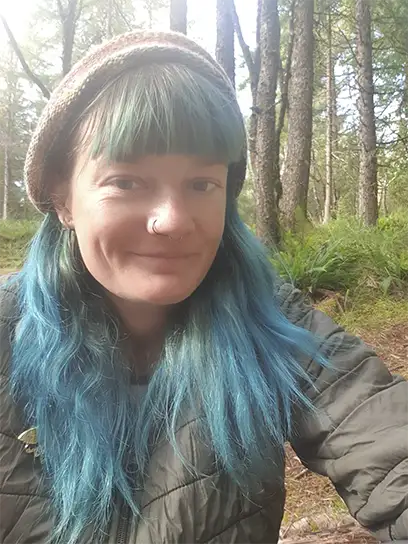
Recording as I walk is a means to react and invite perspective. Paying curious attention to my surroundings, I notice what changes and what stays. Often, paradoxically, I feel an expansive diminutiveness, the layers of the fragile ecosystem becoming, in each walk, more obvious, more precious.
The implementation of shinrin-yoku was intended also to inspire a desire in the Japanese public to protect the forests and natural areas.
If we all spent more time in forests, in bush, on coastlines, and could experience the therapeutic quality of this connection with nature, find the resonating comfort of these places, perhaps we would want to do better in protecting them.
Words by Milly Moon
Coromind: Coromandel’s Collaborative Magazine

Help us take Coromind Magazine to new heights by becoming a member. Click here
Change the Weather for Your Business: Advertise with Us.
Advertise your business in the whole Hauraki Coromandel in the coolest Coromandel Art Magazine, from Waihi Beach/Paeroa /Thames up to the Great Barrier Island.
Advertise Smarter, Not Harder: Get in Touch