The Quiet Reality Behind the People We Drive Past
My history of hitchhiking through unstable Central American countries – and the generosity I received from strangers there – left me with a belief that when it became my turn, I should give back.
So now I pick up hitchhikers who look dangerous enough that one once said to me, “Thank you so much. I know how I look – and even I wouldn’t pick me up!”
For a long time, I didn’t talk about this habit – either hitchhiking myself or stopping for others. In New Zealand, I often pick up travellers heading off to hikes or small adventures. Those lifts are usually light and fun, like stepping briefly into someone else’s story. I mostly pick up hitchhikers to make the journey interesting. With others, I learn that some people need help more than others. I don’t want to stop helping those people. Who else will?
Recently, the last five hitchhikers I’ve picked up have all been New Zealanders: homeless, dealing with mental health issues, and at least two with prison histories.
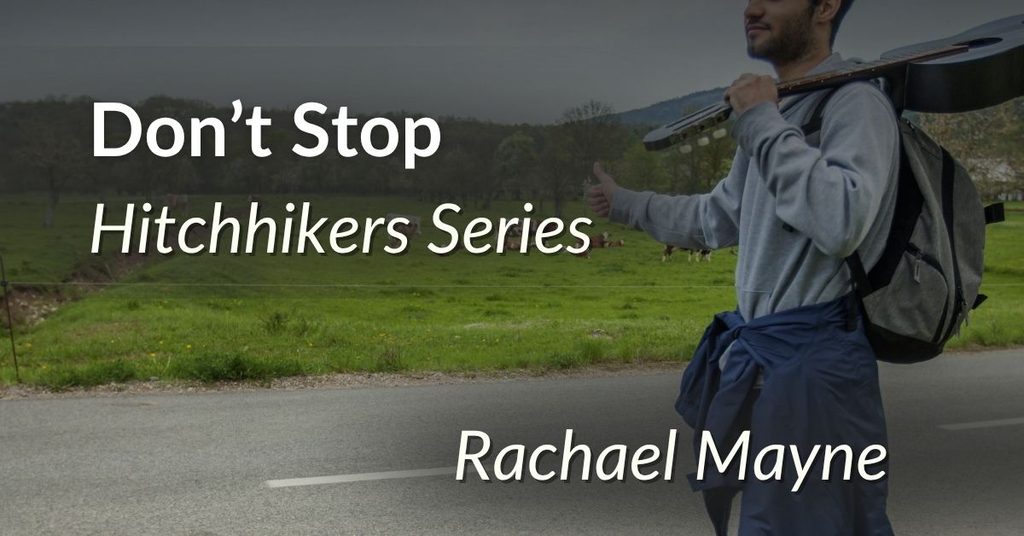
Just before Christmas, in the Waikato countryside, I picked up a man carrying an improbable amount of gear – a tent, a sponge-rubber mattress, a guitar for busking. To get my attention, he pressed his hands together in a prayer gesture. I stopped. Others wouldn’t have.
He told me he was on his way to see his five children for Christmas. There were two mothers involved, and access was limited to birthdays and holidays. I imagined some of his earlier choices hadn’t sat well with the families of the mothers.
His car, he said, had been impounded the day before for not carrying a physical copy of his licence. I didn’t question that, though I’d once received only a warning for the same lapse. When I asked where he usually lived, his answer circled the truth. Was he homeless?
When I dropped him in town, he spotted a shopping trolley and asked me to stop. He transferred his belongings into it and walked away.
In the future, I’ll ask, “Where do you usually live?”
A few months earlier, at dusk, I picked up a hitchhiker on the outskirts of Whangamatā. He apologised for having just taken a ‘massive bong hit’ and warned me that, for this reason, he might not be great at conversation. I wryly thought how polite he was for worrying about me. I also thought: In his world – he thinks saying that to a complete stranger is perfectly normal.
As the evening light faded and we drove out of town, he told me he’d spent eight years in prison – a sentence that saved his life. When he got out, he saw what meth had done to his friends.
As a teenager, he’d stolen motorcycles for his father, who altered and sold them – ‘conversion’, he called it. At fifteen, expelled from school, he moved in with a twenty-year-old girlfriend who already had a baby. Later in life, his mother wrongly believed he was dealing cocaine and called the police on him.
I wanted to write extensively about his life – but decided not to let him into mine. I’d learned that lesson years earlier in Guatemala, practising Spanish with people involved in drugs: Protective, but dangerous to be around.
Last year, near Raetihi, I picked up a large man hitchhiking with a Rottweiler. They were homeless and had been hitchhiking all day in the heat. I couldn’t imagine who else would stop. I did.
I managed to learn a few things about him before the conversation stalled. We rode in awkward silence until Whanganui, where he asked me to pull over beside a shopping trolley. The next day, I saw him hitching in the same direction I was going and I didn’t stop. Limited conversation doesn’t bode well for a second chance.
None of these men spoke directly about mental health or addiction. But all were struggling to survive, and all had been quietly – or explicitly – rejected by their families and communities.
Picking up hitchhikers is often light and companionable. With others, it reminds me how much some people need help – and how few people are able to give it. So, I stop. I listen. I learn.
And for now, I don’t stop stopping.
Read more stories from Rachael here!
Words by Rachael Mayne
Coromind: Coromandel’s Collaborative Magazine

Help us take Coromind Magazine to new heights by becoming a member. Click here
Change the Weather for Your Business: Advertise with Us.
Advertise your business in the whole Hauraki Coromandel in the coolest Coromandel Art Magazine, from Waihi Beach/Paeroa /Thames up to the Great Barrier Island.
Advertise Smarter, Not Harder: Get in Touch