Nature in Frame
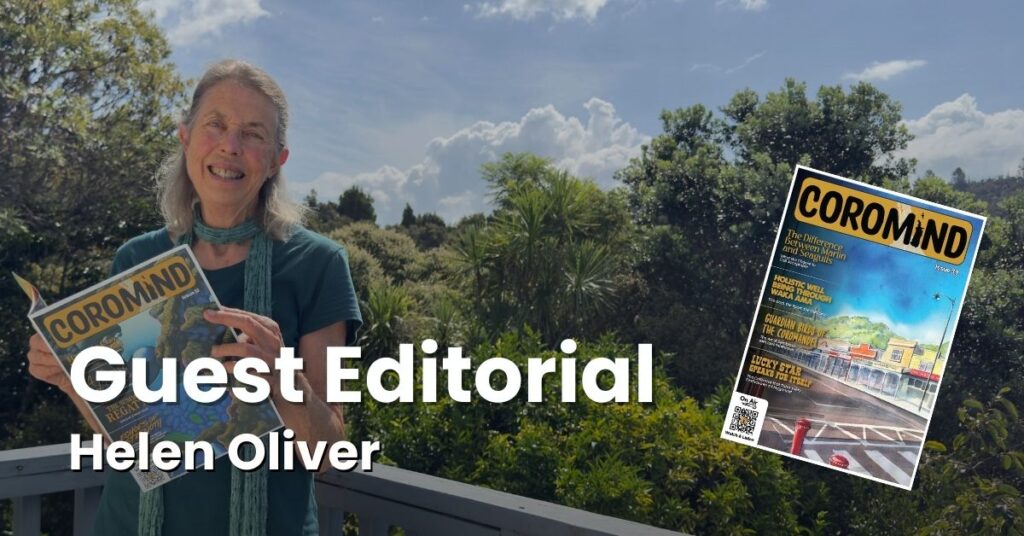
There have been many well-deserved accolades for Coromind, now well into its fourth year of publication. Leo and Taylor have provided space for an amazing array of Coromandel artists of every hue – painters, sculptors, musicians, woodworkers, potters, writers, historians … I stand in awe of what they have managed to achieve, presenting beautiful covers and fascinating stories while yet maintaining consistency along with variety.
My immediate focus, though, is on something else. I love how, from the outset, they have managed to also feature conservation issues and volunteers – an essential aspect of our Coromandel world. By raising awareness of the work being done both on land – along our shores and in the bush – and in the marine environment, Coromind increases the likelihood of residents and visitors changing damaging behaviours, engaging in positive efforts to support or restore restoration efforts, and in general living ‘more gently’ in te ao (nature).
What are some of the major issues facing us? For householders: legal waste disposal (including safe disposal of batteries, electronic waste etc.), controlling invasive pest weeds and animal pests, refraining from contaminating stormwater drains with old paint, chemicals and so on, aiming for self-sustainability, resisting the intrusion of invasive mining of our conservation estate … the list goes on.
For the seashore, both coastal care groups (removing invasive plant species and replanting with native ones), predator trappers and seashore bird protection volunteers (in particular, protecting dotterels during the nesting season) all perform vital services, usually with advice and support from DOC. Also, several local businesses and organisations support significant efforts for tree planting and marine protection.
Across the Peninsula, legions of volunteers are trapping possums, rats, hedgehogs, mice, weasels, stoats and (in certain areas) ferrets – all of which are responsible for deadly attacks on birds, nestlings and eggs, whether ground nesting or in trees, as well as other precious fauna such as geckos, skinks and wētā.
With my own volunteer work over the past several years, both predator trapping and shorebird protection at one particular beach, I’ve seen the resulting increase in birdlife (e.g. bush birds such as tūī and kōtare) and successful dotterel and oystercatcher chick survival. It’s the inspiration that keeps me going!
Looking back through the previous 38 issues of Coromind, this inclusion of conservation issues and awareness of our natural environment is a given – many of the early articles could easily be reprinted now to remind us of the importance of preserving Mother Earth while we can still make a difference.
As stated in the initial Editorial, issue #1: ‘We all play an important part in our community as individuals, but we believe that it’s collective work that creates a better society.’
Where conservation issues are concerned, this is an absolute truth!
So, I offer a huge thank you to Leo and Taylor for their contribution to our community understanding of the importance of saving our environment from destructive practices and pests.
Words by Helen Oliver
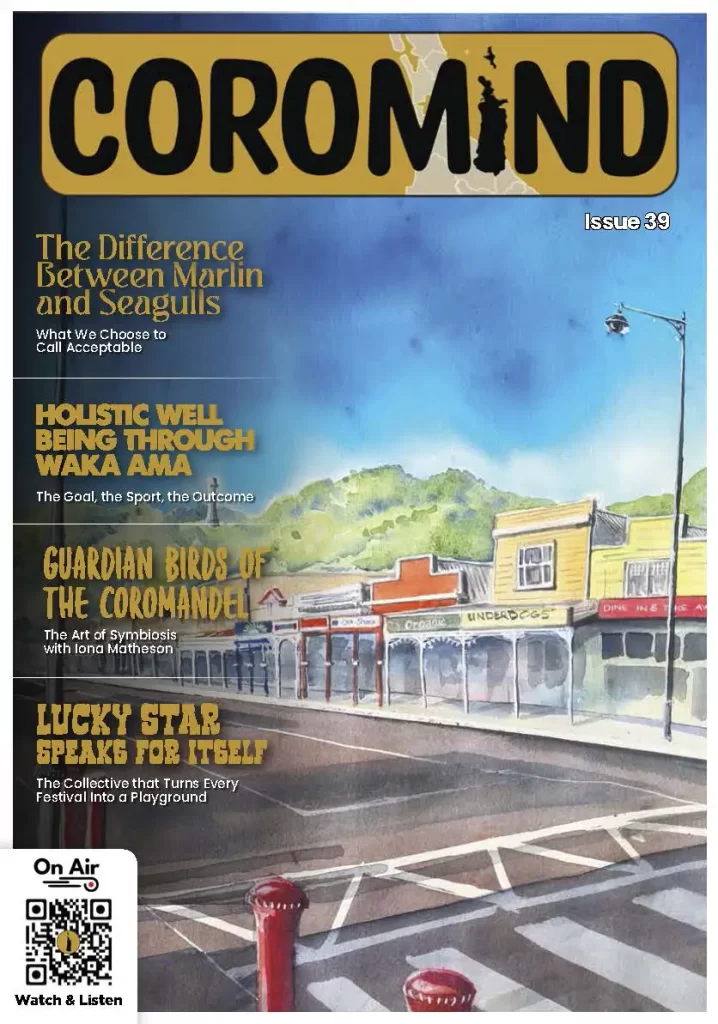
Coromind: Coromandel’s Collaborative Magazine

Help us take Coromind Magazine to new heights by becoming a member. Click here
Change the Weather for Your Business: Advertise with Us.
Advertise your business in the whole Hauraki Coromandel in the coolest Coromandel Art Magazine, from Waihi Beach/Paeroa /Thames up to the Great Barrier Island.
Advertise Smarter, Not Harder: Get in Touch