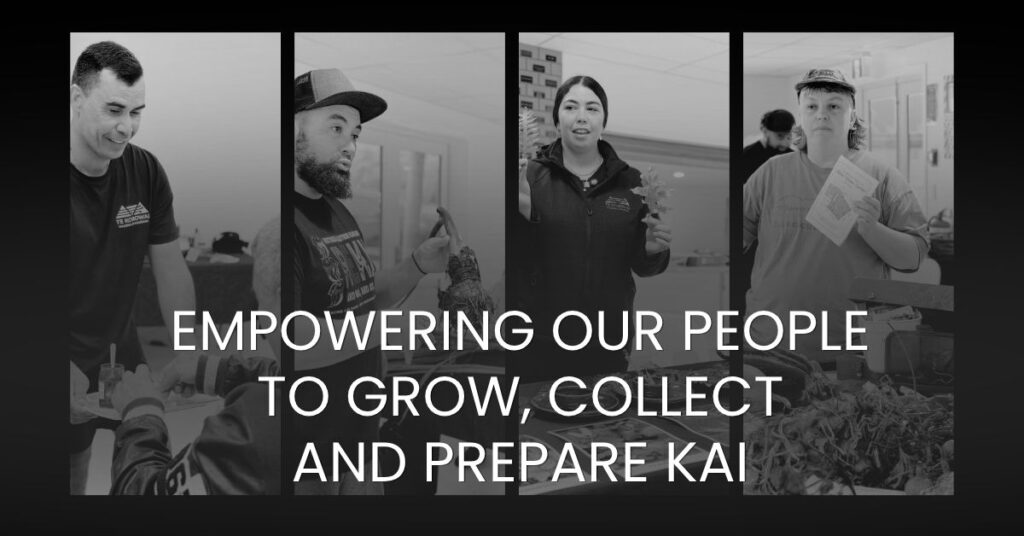
From Māra to Marae, Strengthening Whānau Ora
On a gloomy Thursday morning, as a heavy rain warning loomed over Hauraki, a group of whānau (people) gathered at the waharoa (entrance) of Kerepēhi Marae, awaiting the karanga (welcome call) that would welcome them in.
Whānau braved the storm to attend the most recent wānanga offering (learning session) from Whānau Ora services at Te Korowai Hauora o Hauraki – ‘Kai Symposium: Empowering our people to grow, collect and prepare kai (food).’
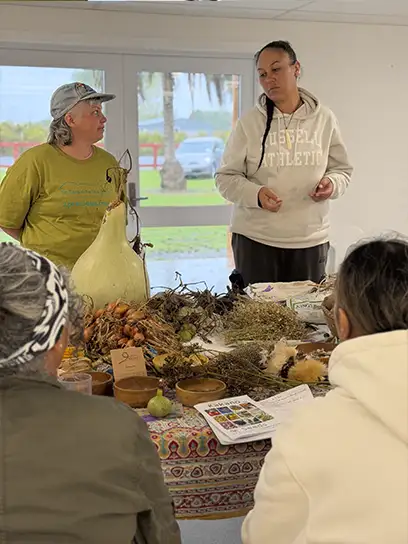
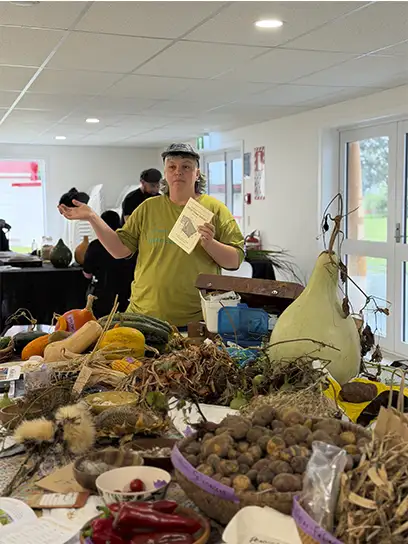
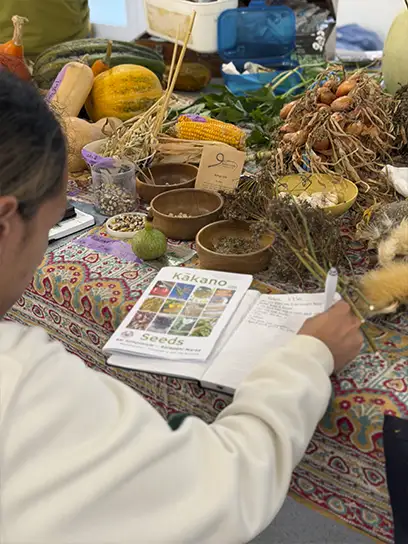
Tess (L) and Jo of ‘Hue Kotahi’ shared the different ways to collect, clean and store seeds for future use, and shared their knowledge around growing a māra kai.
“WHANAU ORA IS ABOUT THE WELLBEING OF WHĀNAU” – the late Dame Tariana Turia
Delivered by Te Korowai Hauora o Hauraki throughout the Hauraki rohe (area), Whānau Ora is an individualised, wrap-around approach, drawing on the collective strength of whānau to create positive change.
Grounded in tikanga, Whānau Ora puts our people in the driver’s seat, making them key decision-makers over their own outcomes and empowering them to lead their whānau into a positive future.
Kaiārahi (navigators) walk alongside whānau as they navigate life’s challenges, and support them to achieve their economic, cultural, and social aspirations – whatever those may be.
So how can this look in practice?
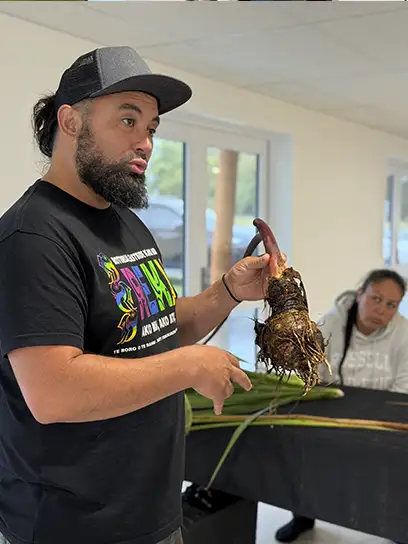
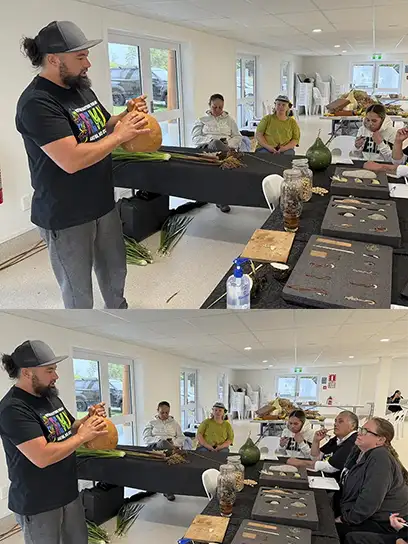
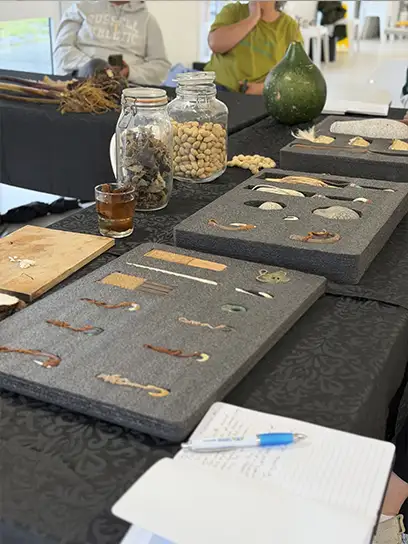
Jamie Watson presented traditional kai: where it can be found/foraged, how it can be preserved, cooked and eaten, and some of the different taonga surrounding kai.
FACILITATED WĀNANGA
The seed was sown for a kai-based wānanga when recurring needs were identified amongst the whānau enrolled in the service; to relieve financial strain and to reconnect with our traditional food systems.
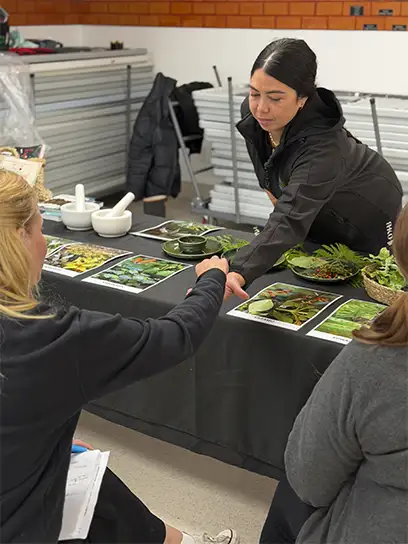
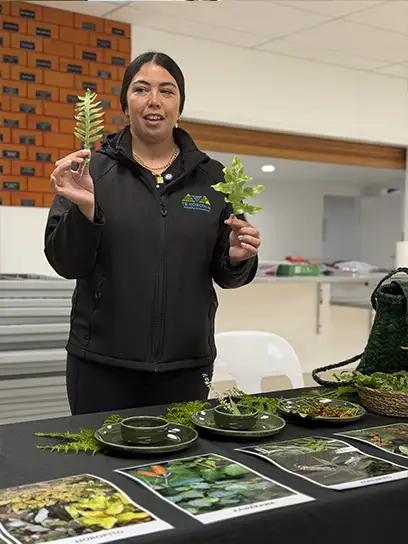
Kiara Fisher shared the whakapapa of ngā tamariki a Tāne and their connection to kai we can harvest from our ngahere.
“We work with a lot of whānau that are struggling with the cost of living,” says lead facilitator Kiara Fisher. “One way that we can overcome those barriers for whānau is finding cheaper ways to gather kai, harvest kai, but also ways that they can use leftover kai, or kai that’s out there given freely in our community.”
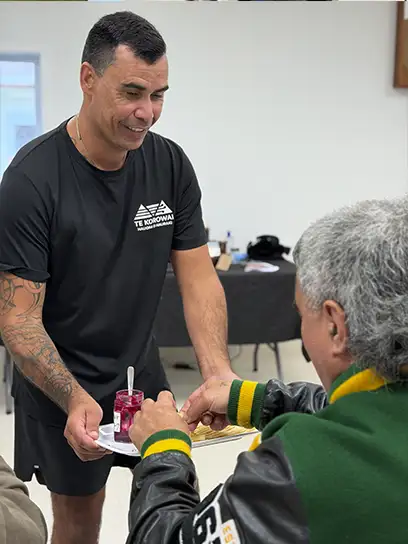
Alongside co-facilitator Dale McMillan, they set out to facilitate a workshop that would connect whānau into some of the valuable sources of knowledge that we have here in Hauraki, and ensure that the mātauranga (knowledge) is passed on and utilised amongst our communities.
Four different stations shared different areas of knowledge around kai: traditional kai foraging and preserving with Jamie Watson, kākano (seed-saving and growing) with Hue Kotahi Collective, kai o te ngahere (forest) with Kiara Fisher, and modern preserving techniques with Dale McMillan.
RECONNECTING WITH KAI
One of the key themes of this event was reconnection with kai in meaningful and practical ways.
Tess of Hue Kotahi Hapori Māra Kai (Community Garden) believes in the importance of knowing where our kai comes from: learning the whakapapa of our seeds, understanding how seeds are grown, and how to share and grow seeds for future generations to pass on.
“It doesn’t matter which culture you’re from, everyone had seeds that they grew, they looked after and they passed on to their children, and to their mokopuna (grandchildren). That’s how we all have lived for however many generations we’ve all been around as humans.”
Her hope is that the more people get back to the māra, the more seeds will be freely shared and available for everyone.
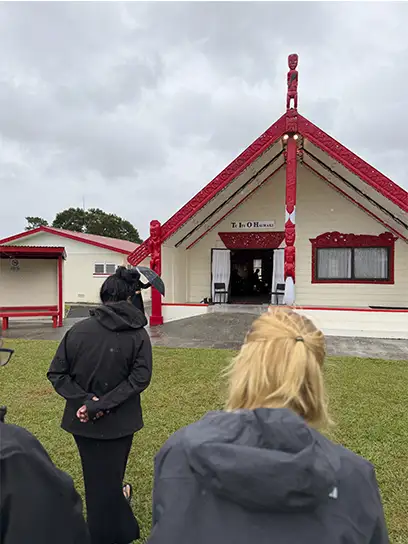
Traditional kai facilitator Jamie Watson is passionate about keeping the knowledge and practices of our tūpuna (ancestors) alive.
He lives out these values daily through his off-grid, self-sufficient life on the whenua, and believes in the importance of indigenous cultures maintaining the link to their traditional food systems, and the associated link to well-being.
“Ko au te whenua ko te whenua au: If you are the land and you are the moana, then you have a connection with it, that’s part of your identity. The stronger you feel in your identity, the more sure you are of who you are as a person.”
He learns as much as he teaches in these wānanga about the traditional practices that happened in Hauraki. “I think it’s really important to capture that because within a generation or so that old thread of knowledge won’t exist in memory anymore.”
For Kiara and Dale, it’s about introducing whānau who are struggling to some alternative kai methods and adding a few more tools to their kete, “to hopefully build our whānau to be kai resilient and have sustainable kai methods.”
OUTCOMES
Through mātauranga Māori (knowledge) and connection to taiao (natural world), this wānanga gives our whānau options outside of the global food system that we rely on to provide food in exchange for money.
But through whakawhanaungatanga (establishing relationships), it also connects whānau with existing community groups and collective resources, building resilient communities that can continue to support each other into the future, on the pathway to kai sovereignty and mana motuhake.
To find out more about our Whānau Ora service or to self-refer, give us a call on FREEPHONE 0508 835 676 – option 4, email whanau.navigators@korowai.co.nz or visit our website korowai.co.nz
Words by Te Korowai
Coromind: Coromandel’s Collaborative Magazine

Help us take Coromind Magazine to new heights by becoming a member. Click here
Change the Weather for Your Business: Advertise with Us.
Advertise your business in the whole Hauraki Coromandel in the coolest Coromandel Art Magazine, from Waihi Beach/Paeroa /Thames up to the Great Barrier Island.
Advertise Smarter, Not Harder: Get in Touch