Words That Rose with the Gold
Poetry has long been a way of expressing beauty and intense emotions, passing down history, and telling stories about life experiences – the earliest poetry being recited or sung as a way of remembering law, family history and the broader human experience.
Through the arrangement of language for its meaning, sound and rhythm, poetry can be more effective than ordinary speech in stirring up strong emotions.
Traditionally, poetry also explores the many facets of eternal and boundless love, as recorded in the earliest known poem, “Love Song of Shu-Sin” from around 2000 BCE, and timeless classics such as Shakespeare’s Sonnet 18, and Elizabeth Barratt Browning’s “How Do I Love Thee”.
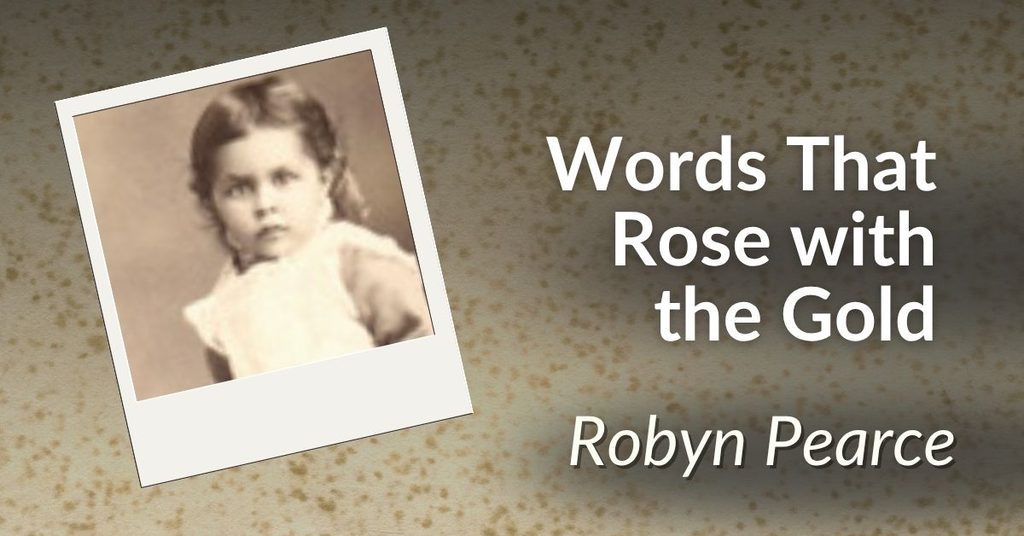
Throughout history, there have been many talented poets who have captivated with their poetic forms and emotive expression. Charlotte Lawlor was one such poet. From a very early age Charlotte was given the nickname ‘Bob’ by her family, and she later wrote under the pen-names, ‘Bob Lawlor’ and ‘Ruthyn’.
Charlotte was born on 3 October 1878, at Shortland (Thames Advisor, 7 October 1878) to George James Lawlor (1852-1913) and Augusta Eliza Lawlor née Grey (1855-1933). George and Augusta married in 1876. (1) George was a gold mine battery manager, and later a district agent for the A.M.P. Society.
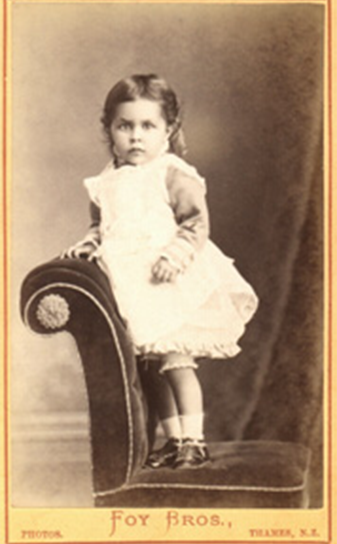
Augusta was the niece of Sir George Grey who was twice Governor, and 11th premier of New Zealand. Charlotte was the second daughter in a family of four girls, and the granddaughter of Henry Charles Lawlor who, with his wife Anne and family, arrived in Onehunga, Auckland aboard the ship Brilliant in the early 1840s. The Lawlor family was one of Thames’ oldest and most respected families. Charlotte and her sisters initially received private schooling, and later continued their education at Kauaeranga Boys School, and Thames High School. Her talents as an artist showed up early in her life. At the age of 14 she was working for Foy Brothers, photographers (Pollen St, Thames), and by age 22 was receiving instruction in black and white sketching in Auckland. She also enjoyed musical theatre, and was a talented actor and singer.
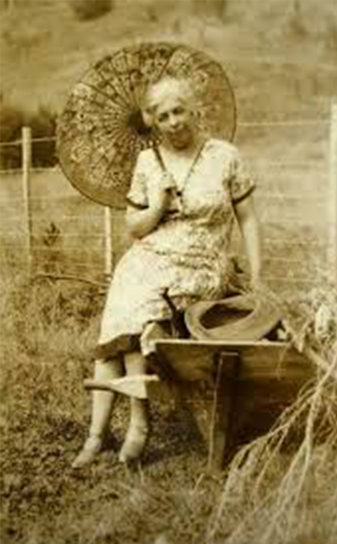
By 1903, Charlotte was writing prolifically for a number of papers and magazines, was living in Queen Street, Thames (with her parents), and working as an advertisement writer and designer. At age 28, she moved with her family to Waihi where gold had been discovered in 1878, as George thought there would be more work available there.
When George died in 1913, (2) Charlotte and her mother relocated to Manukau Road, Auckland, where Charlotte worked for the advertising agency, Chandler & Co., in Symonds Street.
It was here that she became responsible for the Fleming’s campaign, and created the well-known character of Sergeant Dan the Creamota Man, to help sell a breakfast cereal called Creamota. Finding the Auckland house too big for just the two of them, Charlotte and her mother moved to a cottage on the Tapu-Coroglen Road. Charlotte’s mother Gussie, as she was affectionately known, died in 1933 from a sudden heart attack.
Gussie had been associated with the social and philanthropic work of Thames for most of her life, until her health began to fail.
After experiencing health issues, and the ordeal of operations, and X-ray and radium treatment, Charlotte succumbed to her illness, and died on 2 July 1941 aged 62, at Thames Hospital. (3)
“Charlotte is remembered for her talents as a writer of verse, a water colour artist, and having a rare sense of humour and natural grace of style.”
Toss Hammond, 1966.
References: (1) BDMNZ, 1876/1227, Augusta Eliza Grey and George James Lawton {sic}; (2) BDMNZ, 1913/883; (3) BDMNZ, 1941/23080; Thames Museum collection archives; Photos Thames Museum collection.
Extract from: The Road Graders of the Thames Coast – Tiger
By Charlotte (Bob) Lawlor
You may meet him at the Mata,
Perhaps at Thornton’s Bay,
Turning at the Whalebone,
Back the same old way.
Clinking sound of metal,
Shingle, sand and shell,
Tiger grading up the road,
Tiger doing it well.
Oh! The highway is forever,
And the highway is the King’s,
On it roll the motor cars
And the lesser things.
So, Tiger’s task is crowning
The highway fair and free,
To make it safe for everyone,
For him, and you and me…
Words by Robyn Pearce, Volunteer, Thames Museum Te Whare Taonga o te Kauaeranga
Read more stories from Robyn here!
Coromind: Coromandel’s Collaborative Magazine

Help us take Coromind Magazine to new heights by becoming a member. Click here
Change the Weather for Your Business: Advertise with Us.
Advertise your business in the whole Hauraki Coromandel in the coolest Coromandel Art Magazine, from Waihi Beach/Paeroa /Thames up to the Great Barrier Island.
Advertise Smarter, Not Harder: Get in Touch