Put the Phone Down, Pick Up a Pencil
For most of my working life, I have been writing software. People tend to think computer programming is about maths and sounds like the exact opposite of art. But what hooked me early on was realising that software code was just another malleable material I could build things with. Because a software program is a digital abstraction of a system or process that exists in the physical world, and creating one is above all a creative challenge.
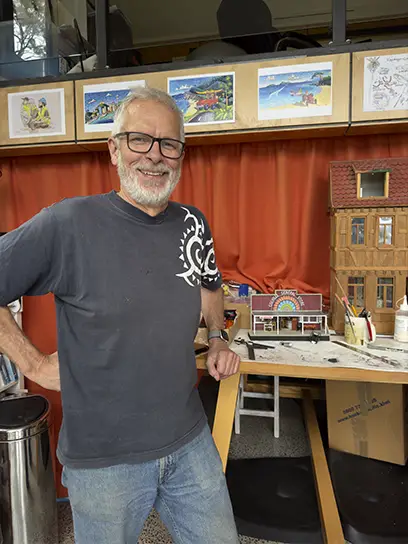
And that’s what links a lot of what I do in both the digital and physical worlds – the joy of building and making. The creative process.
Sketching, painting, or writing code, building things from recycled odds and ends – different materials, but all scratching the same itch.
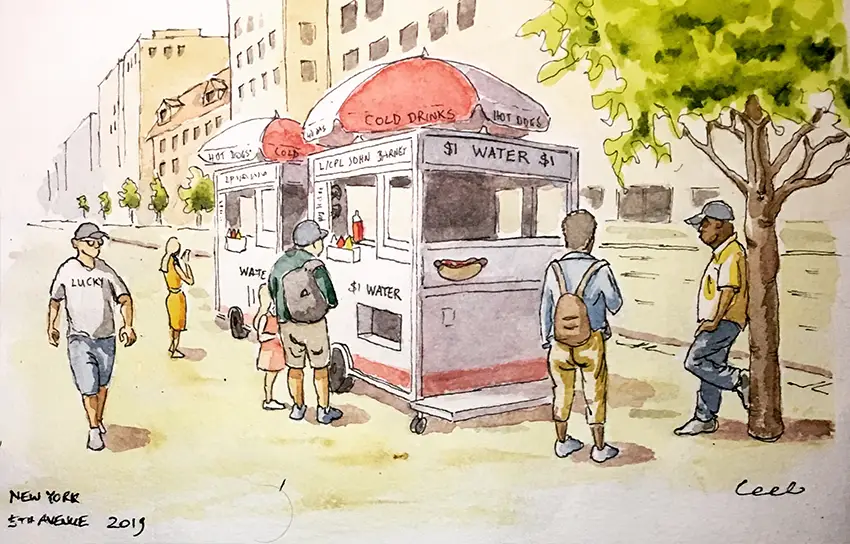
I have sketched for as long as I can remember. In recent decades, I travelled often for work and always carried along a sketchbook. I flew about two million kms in that time.
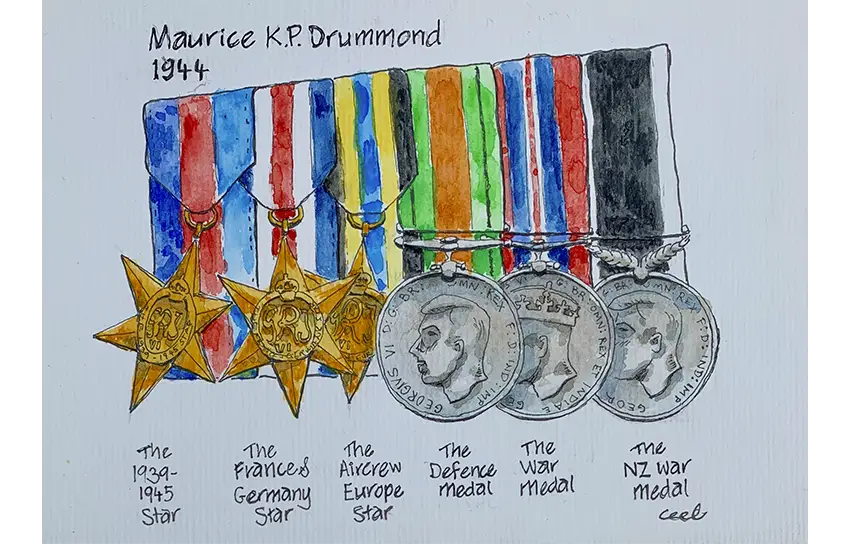
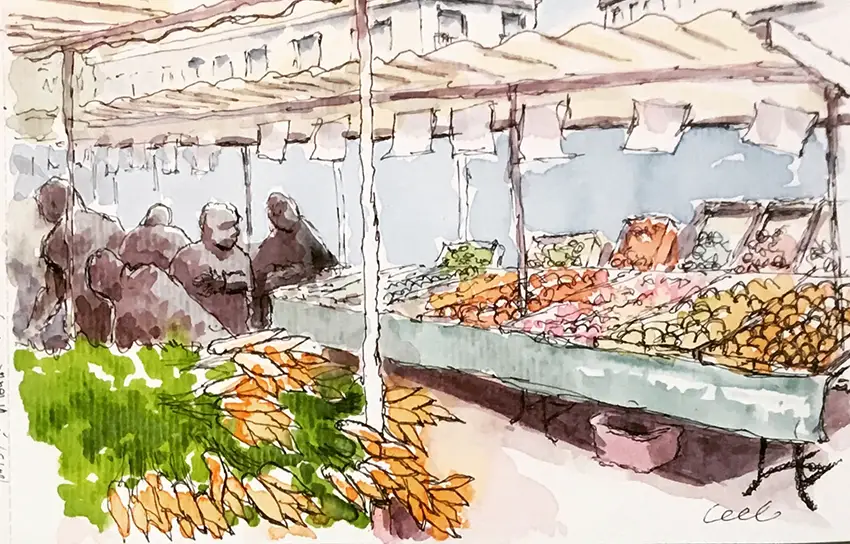
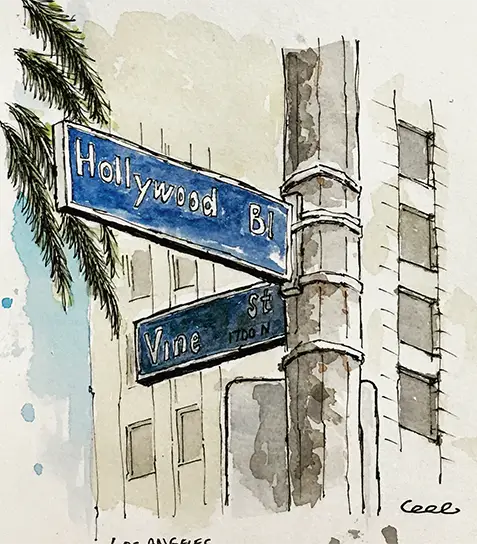
This ‘Travel Sketching’ started as a pastime and a way of recording places I visited, but I eventually realised it was doing something better. It meant I needed to slow down when visiting a new city, and allowed serendipity in. Unlike a camera, a sketchbook forces you to sit somewhere and actually take in what you see. Today, I can look at almost any sketch I made while travelling and tell you where I was, if I was with anyone, and whether I was feeling tired, content, lost, hungry, or all four. I cannot say the same for all but a few of the thousands of photos stored on my iPhone.
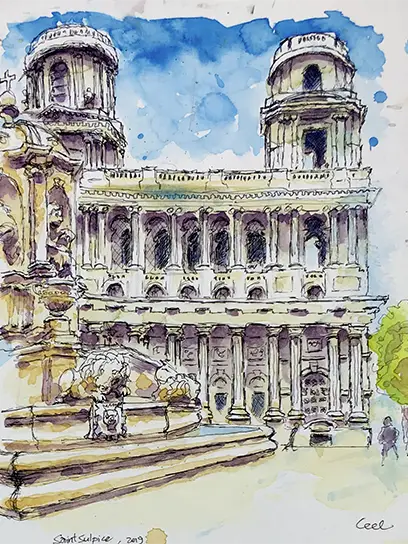
One of my favourite Travel Sketches emerged in Paris when I got on the wrong bus, jumped off at a random stop, and found myself standing in front of a church. So I sat down on a bench beside a fountain, looked around, and started sketching.
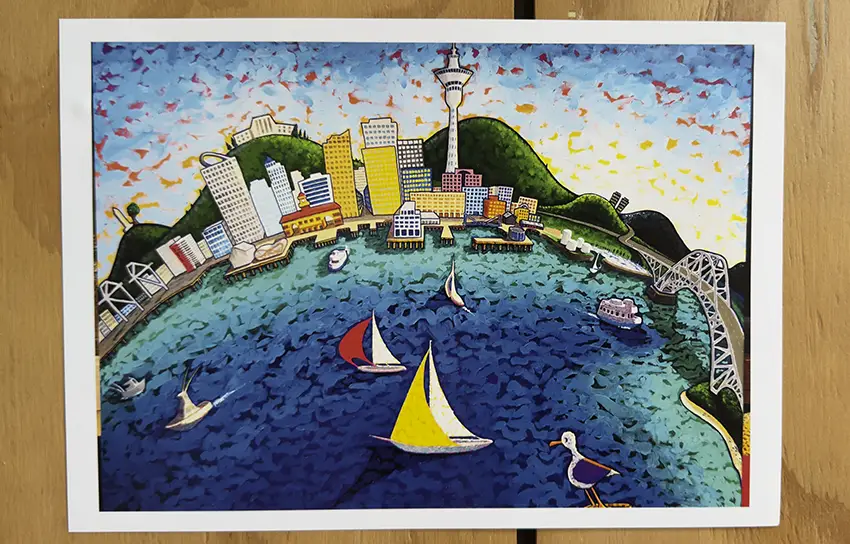
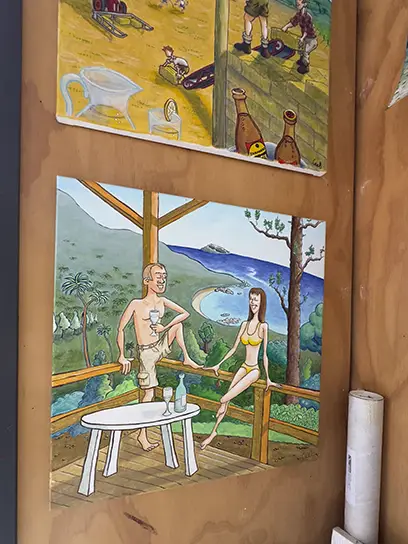
I’ve always been drawn to places with character, like old buildings, weathered boats, rustic stone bridges, shearing sheds held together by corrugated iron and optimism.
Character comes from age, wear, craft, and the visible signs of many lives passing through. That is what I’m usually trying to capture: a sense of place, an imagined memory, the story of lives and experiences.
Coromandel has its own pace of life. The state of roading in and out means we’re basically an island, and island time explains that pace, and also that people here seem to have the openness and independence of island folk everywhere. When you first move here, slowly your defences roll away, your senses all open up again. And now you also have time to listen to them.
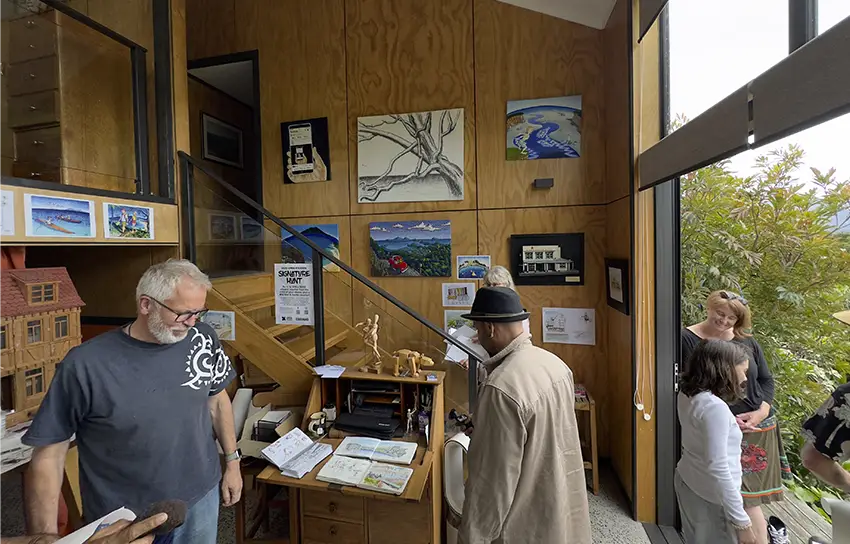
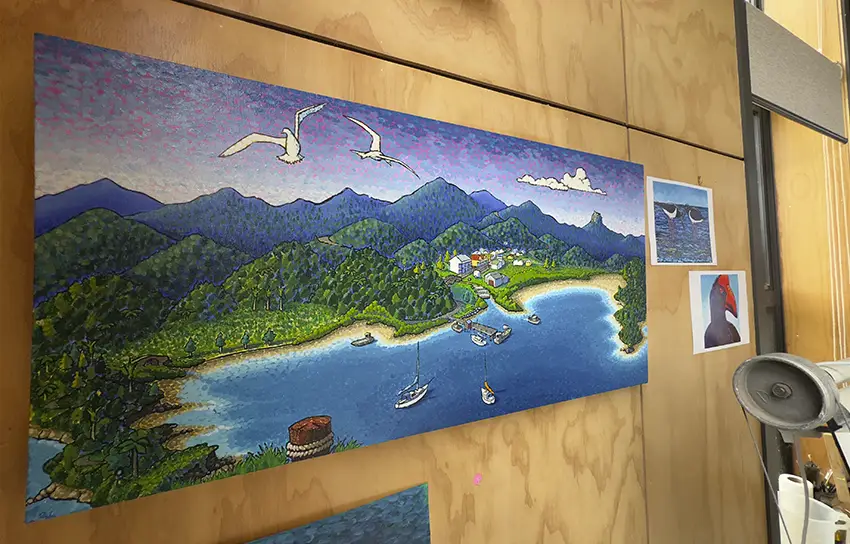
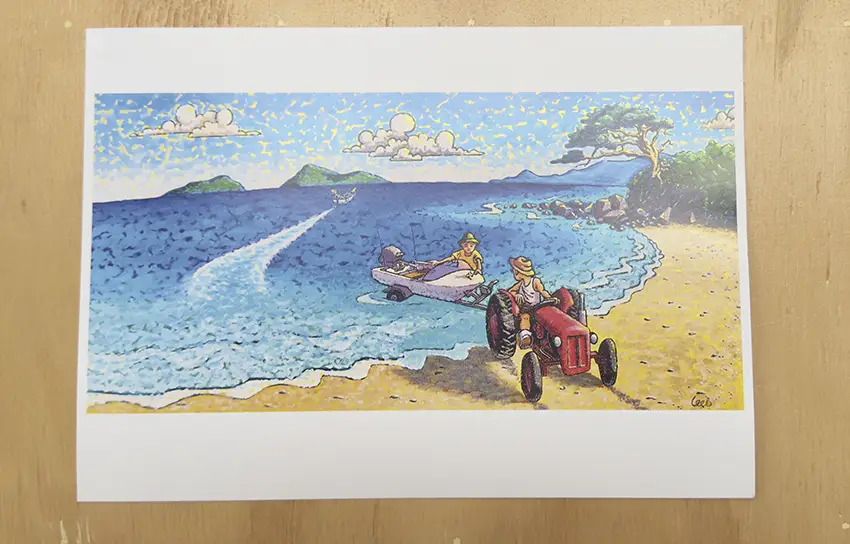
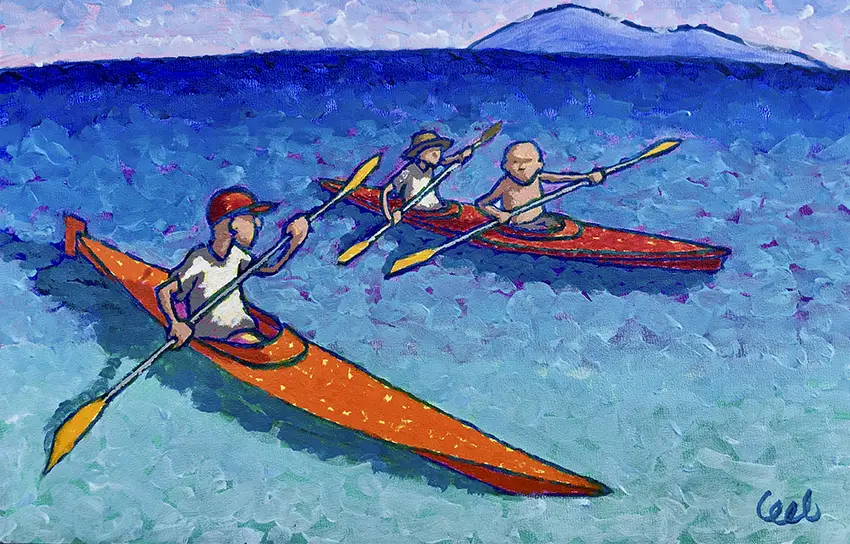
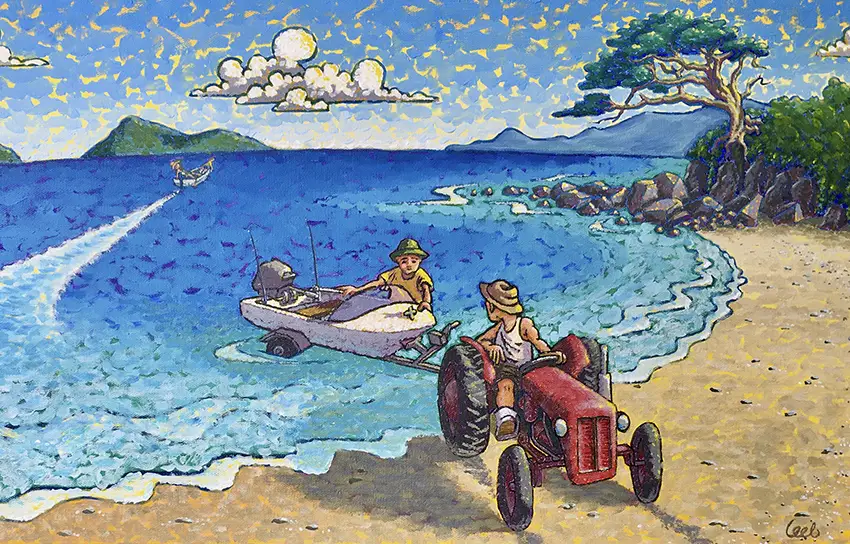
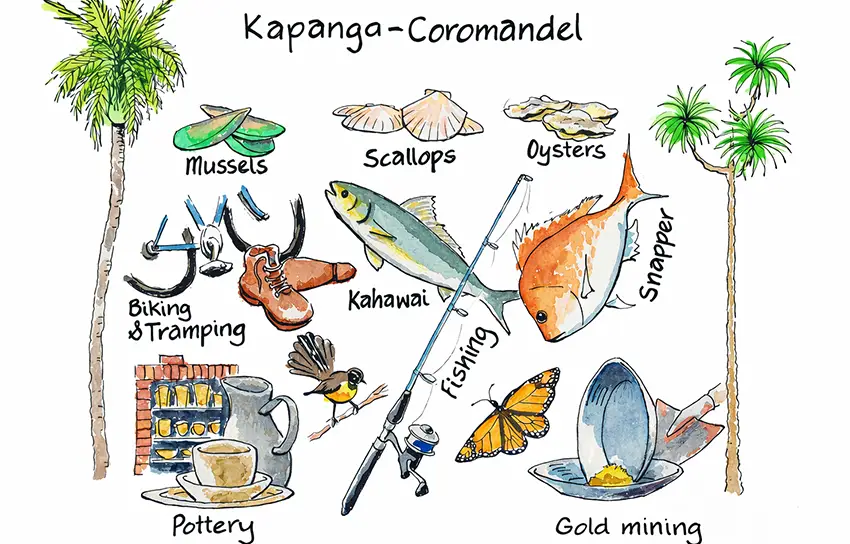
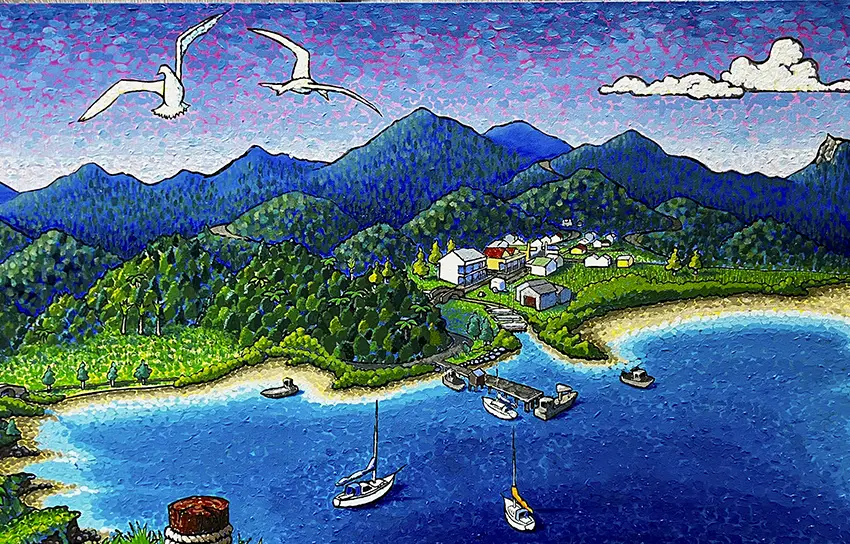
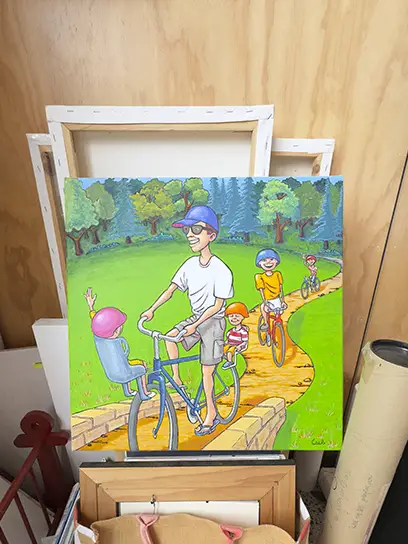
Most of my painting now revolves around Coromandel landscapes and seascapes and the people who live here: wide, multilayered vistas of coastlines, mountains, harbours, small towns and bush all jumbled together. After years travelling overseas, I realised many people spend a fortune flying to holiday destinations with the kind of views we drive past here every day. I try never to take it for granted.
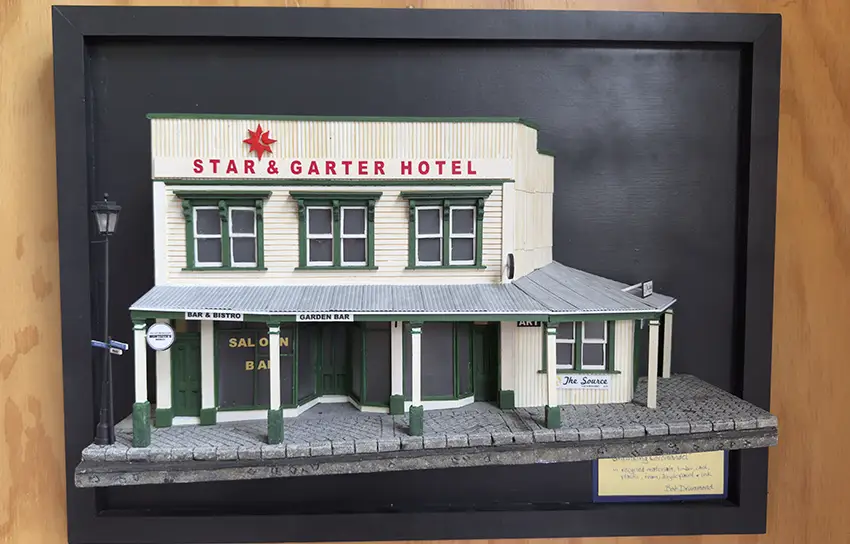
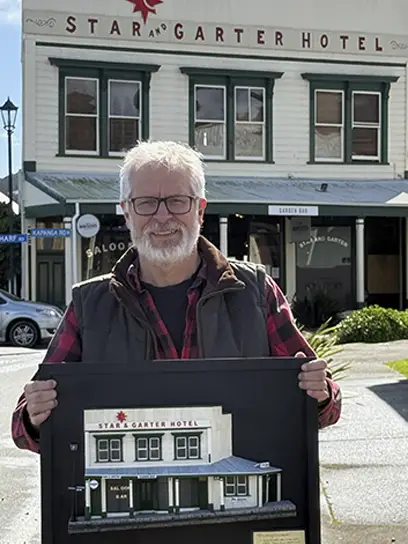
A couple of years ago, on a whim, I constructed a framed miniature facade of the historic Star and Garter Hotel in Coromandel for an exhibition. I used timber, card, foam, paint and other assorted recycled things I had collected. I’m still not even sure whether or not it’s ‘Art’.
The response surprised me – it really seemed to resonate with people. Since then I’ve been exploring local iconic buildings in mixed media like this. My most recent target has been the Colville Store.
I’ve noticed small changes to each of the actual buildings since I captured them, so the work has accidentally also captured a moment in time. I like that. I find that art often sneaks up on its own meaning some time after you have made it.
People sometimes ask whether making art will still matter now that AI can produce any image in seconds. But I suspect we will increasingly value our interactions with real people and things made by human hands, showing human inspiration and human imperfection.
But in any case, I don’t sketch or paint for the output. I do it for the pleasure of making it.
If you have come to believe you are not creative, my advice is simple: put your phone in a drawer, allow yourself enough time to just get bored, and keep a pencil and paper nearby.
Kia kaha e hoa mā.
Coromind: Coromandel’s Collaborative Magazine

Help us take Coromind Magazine to new heights by becoming a member. Click here
Change the Weather for Your Business: Advertise with Us.
Advertise your business in the whole Hauraki Coromandel in the coolest Coromandel Art Magazine, from Waihi Beach/Paeroa /Thames up to the Great Barrier Island.
Advertise Smarter, Not Harder: Get in Touch
Coromind: Coromandel’s Collaborative Magazine
Help us take Coromind Magazine to new heights by becoming a member. Click here
Change the Weather for Your Business: Advertise with Us.
Advertise your business in the whole Hauraki Coromandel in the coolest Coromandel Art Magazine, from Waihi Beach/Paeroa /Thames up to the Great Barrier Island.
Advertise Smarter, Not Harder: Get in Touch