Ahuahu & Andy Series – Becoming the Island’s Eyes and Ears
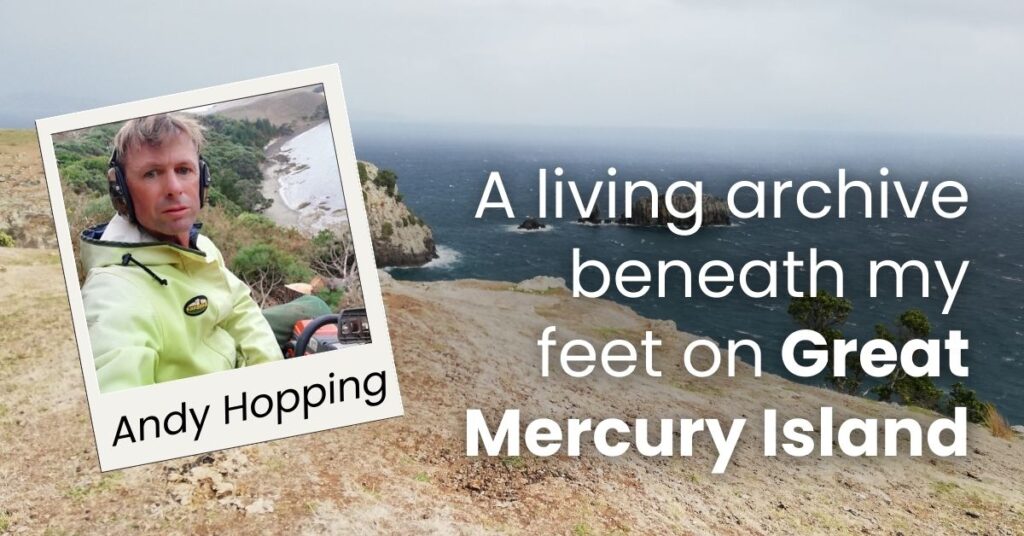
I was full-time island bound, a novice ranger on Great Mercury Island in 2016, not at all well versed in environmental sciences, but with a natural love of nature via curiosity and respect. My tendency is to explore valleys, hard-to-get-to places that are ambiguous, the less attractive the better, not to hunt or take a picture, just to be part of a world much bigger than we are as people. I was fortunate to be able to support and enable a talented and well-studied group of specialists from different scientific fields who were studying on Ahuahu, none of whom were able to be on the island as I was – experiencing the characteristics of an island going through the adolescent stages of being free of rodents for the first time in over 700 years.
I was funded by the Island owners, tasked with biosecurity, monitoring, growing relationships with partners and the general public, and enabled to watch from up close but mentored by professors and such. For someone who is genuinely interested and proud of our great uncles and aunties, our land with all its power and sustenance, I was shocked to learn that after more than 40 years growing up and living around Whitianga and the surrounding area how little I had learned about the heritage of our land and our forefathers and mothers.
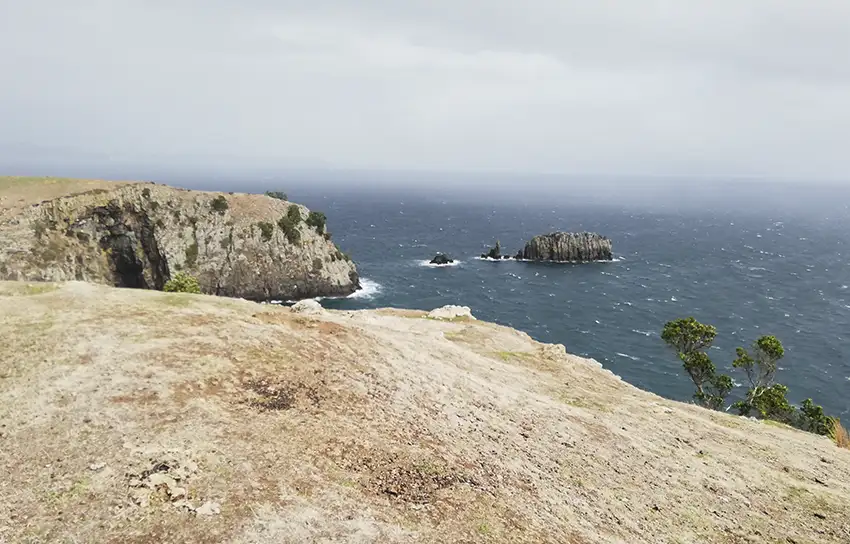
It is a remote place in winter when the weather is bleak, especially in the backcountry. It makes a confident walker move slowly, thinking about the next step. Help or rescue would be slow coming and often it could be hard to find me, the voice in the back of my head always saying ‘Be careful where you step’. There were times when I wouldn’t see another person for a week, often working closer to Green Island than to my house on Great Mercury Island.
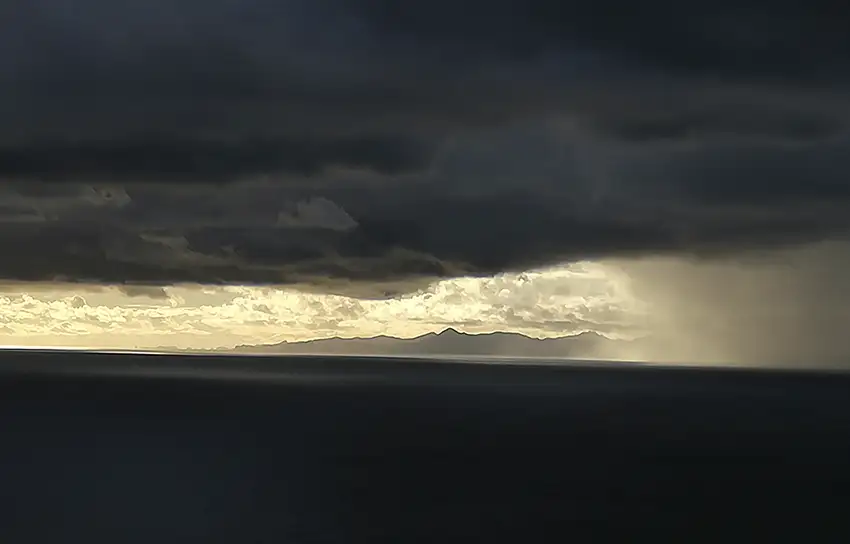
The weather was moody and cold, especially working around the bluffs and clifftops, like I would imagine Scotland might feel like. There is a weather station on the north-western side of the island, which services the Nowcasting weather information service on the VHF radio – along with Channel and Slipper Island, etc. This station has been there for many years and is highly inaccurate because it has been put on the edge of the cliff face. Depending on the wind direction, it can give very high wind averages over a relatively light to moderate day and vice versa. It highlights the many different moods around the island from one end to the other, depending on where you might go.
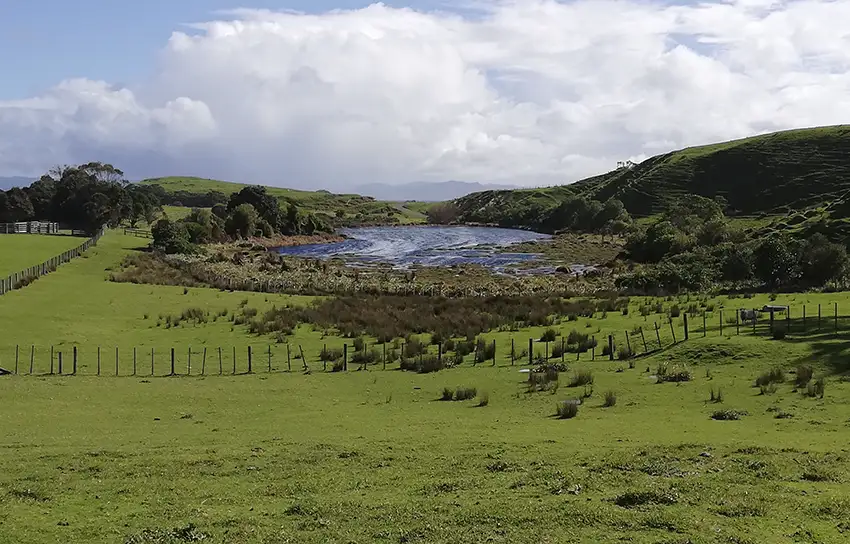
Even so, the island’s ambient temperature is about three degrees warmer than the mainland, which supported the temperate plants brought on the waka to this land from the tropics. For this reason, also because of ample fresh groundwater and probably security, the island supported great gardens and served as sort of a seed bank for acclimatising plants such as taro – which was present in the island gardens for at least 300 years after the first arrivals.
Likewise, kūmara (sweet potato), although more resilient to New Zealand’s temperatures, were acclimatised on the island. Ahuahu supported as many as 5,000 people, with many pā sites and communities with great gardens in the early times – possibly essential food resources for early migration around Aotearoa. This is supported by the fact that all types of obsidian found naturally in New Zealand can be found on Ahuahu, none of which naturally occur there; they have been brought there by waka to a hub forged by gardens, knowledge for navigation, and seasonal cues built around many stars and one constellation in particular called Pleiades (the seven sisters), or as we now celebrate nationally in New Zealand, Matariki (the Māori New Year).
I wonder what the new year actually means in practical terms. A calendar datum point of time, for planting, yes – but also for navigating by stars where during the new year other stars might align with a fixed feature on the landscape to give directions for a voyage back to the Pacific, back to Havaiki, Havai’i or Avaiki, depending on where you are from.
There are rock formations aligned to the stars for directional references on Great Mercury Island; they are slightly misaligned nowadays, because after 700 years the earth has tilted somewhat on its axis, changing how the stars line up to the fixed landmarks on the ground at the time of Matariki.
Words by Andy Hopping
Coromind: Coromandel’s Collaborative Magazine

Help us take Coromind Magazine to new heights by becoming a member. Click here
Change the Weather for Your Business: Advertise with Us.
Advertise your business in the whole Hauraki Coromandel in the coolest Coromandel Art Magazine, from Waihi Beach/Paeroa /Thames up to the Great Barrier Island.
Advertise Smarter, Not Harder: Get in Touch