

Why So Many People Leave the City in Mid-Life
Across Aotearoa, more people in mid-life are leaving cities and resettling in coastal towns. These moves are not about retirement, but about re-thinking how to live well: with less pressure, stronger connections, and a greater sense of purpose. This six-part series explores what draws people to the coast, what they find when they arrive, and how both newcomers and long-term locals are reshaping community life in the process.
From long commutes to constant pressure, city life can wear people down. This article draws on my Master’s research on why pre-retirement age people move to Mercury Bay and explores why mid-life has become a turning point: why a remote coastal region offers something cities no longer can.
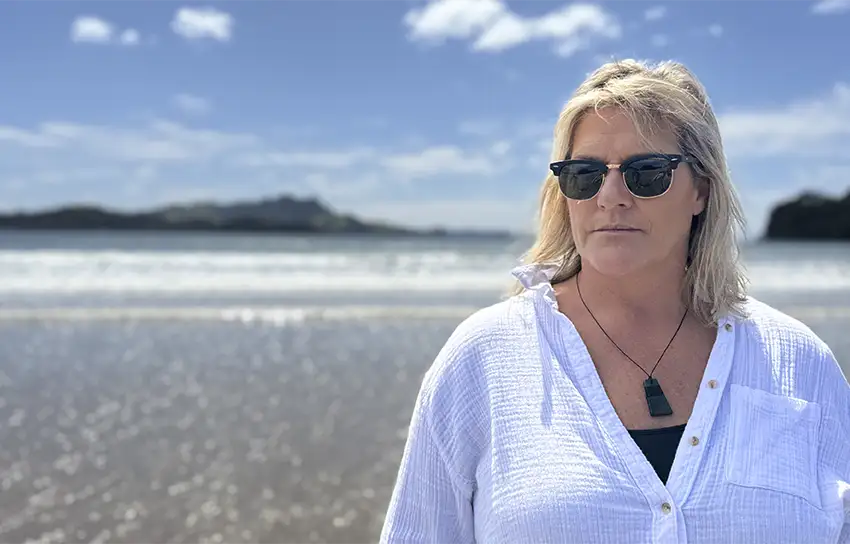
At some point in middle age, many people begin to ask a quiet but persistent question: Is this really how I want to live the rest of my life?
For a growing number of New Zealanders, the answer to that question leads away from the city and towards the coast.
This particular stage of life is called ‘pre-retirement’ and typically covers the age range of 45 to 65 years old. It sits somewhere between full-time career building and full retirement.
For most people, there are some common features: children have usually left home, careers are established, there is enough confidence to make change, and enough awareness that time is precious.
This kind of move is not retirement in the traditional sense. The people making it are often still working, still active, still busy. But they are no longer willing to accept constant pressure as the price of success. Instead, they are seeking something simpler, slower, and more meaningful.
Cities offer plenty of opportunity, but they also demand constant attention. Many people say they felt permanently ‘on’, with pressure to be always available, and consequently, always juggling priorities. Over time, this takes a toll on health, on relationships and ultimately, on a sense of meaning.
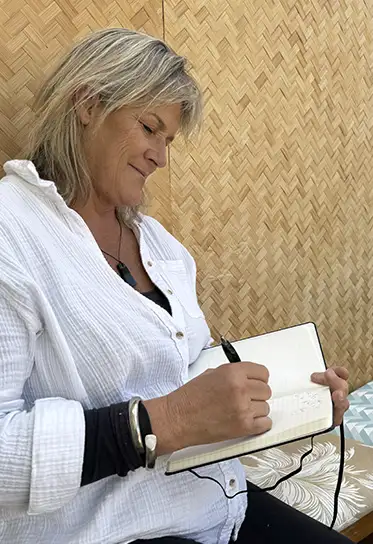
The allure of Mercury Bay offers a powerful contrast. The obvious lack of crowds is just a surface-level observation. On a deeper, more experiential level, the contrasts are more subtle, but they are also more powerful. The sea replaces traffic noise. Walking or cycling replaces commuting. Time begins to feel fundamentally different, more in-tune with the cyclic rhythm of nature or tides. People notice the weather again. They recognise faces at the supermarket.
A move from a city to a remote, quiet town is rarely impulsive. Instead, it is a rational, well-pondered decision, in which competing values are weighed up. Most people think about it for years. They might holiday in the same place repeatedly. They begin to imagine what daily life might look like rather than just weekends away, and ask practical questions about healthcare, housing, and work. They consider distance and travel-time; how will they negotiate maintaining family relationships and friendships when their people are a three-hour commute away?
Money plays a role in people’s decisions to move, but it’s not the whole story. Selling a city house and buying in a smaller town can free up finances, but what people value most is control over their time. Additionally, because Mercury Bay is a premium holiday spot, house prices reflect that reality so monetary gains may not be significant, if at all.
Consequently, many who come here still need to work, and opt for part-time work or flexible arrangements. Others continue to work full time. Most people acknowledge that career building opportunities are unlikely in a smaller place, or at least, more difficult to source, and most people also acknowledge and accept that their incomes will likely drop.
Yet moving is only the first step. Arriving in a new place doesn’t automatically bring belonging and becoming ‘local’ takes effort. People soon realise that moving into a different environment is not just a matter of packing up your old house and unpacking it in a new one. Instead, they must learn new rhythms, new social rules, and new ways of contributing.
Learning to fit in requires patience and humility. It takes time to become accepted as a local. Still, for many, the trade-off is worth it. They speak of breathing more deeply, sleeping better, and feeling more present. Life feels less crowded, not just physically, but mentally.
Leaving the city in mid-life is not about escape so much as recalibration. It is a decision to place quality of life at the centre, rather than on the margins. And as more people make this choice, coastal towns are quietly reshaping: not just in numbers, but in character.
Stella Pennell is a PhD Sociologist, NZ karate champion, and a curious human being. Watch her episode on the ALTBAYS Table Talk here, and read more of her articles in Coromind here.

Coromind: Coromandel’s Collaborative Magazine

Help us take Coromind Magazine to new heights by becoming a member. Click here
Change the Weather for Your Business: Advertise with Us.
Advertise your business in the whole Hauraki Coromandel in the coolest Coromandel Art Magazine, from Waihi Beach/Paeroa /Thames up to the Great Barrier Island.
Advertise Smarter, Not Harder: Get in Touch