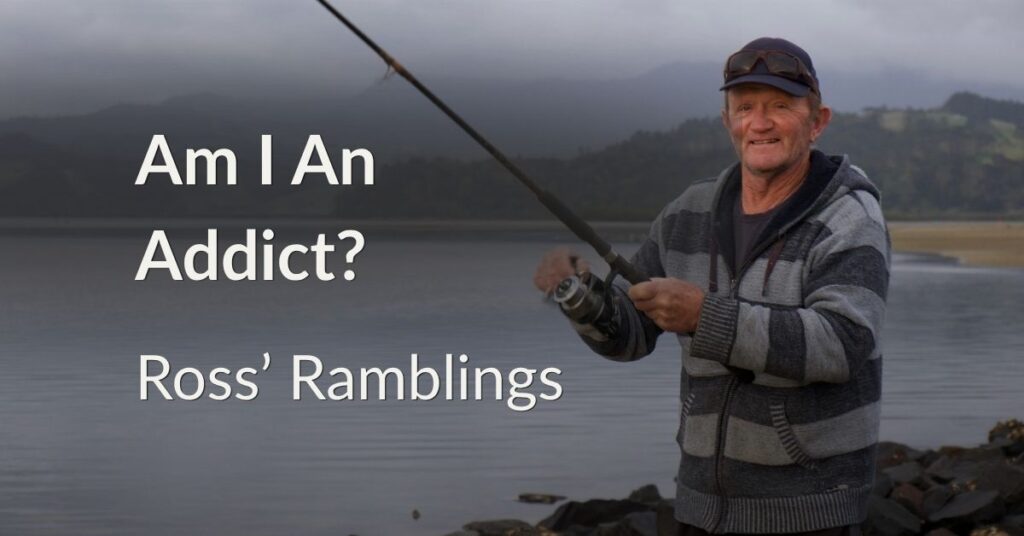
Walking the Line Between Habit and Addiction
Addiction is a word used for a wide range of experiences, both positive and negative and some where it is not clear which it is. “I’m addicted to surfing,” I remember telling my mother, when she asked why I had skipped university lectures and spent the day at the beach. I have to ask myself, “Was that a good addiction that resulted in a positive contribution to myself and the world, or was it a selfish fetish that put a financial strain on my parents who were paying for the lectures I wasn’t attending?
Of course, surfing is a very healthy activity and saves the health department a lot of money due to the fact that surfers because of the physical nature of their sport are generally less likely to require medical attention than the average person. But then of course there are the less quantifiable effects of the well-known surfing lifestyle, often involving the age-old cliché of ‘sex, drugs and rock ‘n roll’, not to mention the injuries caused by head butting a coral reef, being sliced open by a surfboard fin, or becoming the victim of a shark attack. On balance, I feel that this addiction which still has me hooked at the age of 75, tilts the scales on the positive side considering the fact that I am still alive and still have enough marbles to write this article. The sex, drugs and rock ‘n roll seem to have failed to tip me over the edge into a serious addiction abyss. I would imagine that similar logic could be applied to many other physical activities and sports.
Unfortunately, addiction has a predominantly negative side. I had a friend who from his teenage years was addicted to sex. While he was young and unattached, this didn’t manifest as a big problem and many of his peers envied his charming demeanour. However, when serious commitments like marriage and children barge their way into such an addiction, things can begin to turn to custard. He ended up with four children with his wife and an unknown number with other women, one of whom was his wife’s best friend.
Another addiction, which I considered to be negative at the time it occurred, was a close family member’s addiction to prescription drugs combined with alcohol. In the 1960s and 70s, women who were unhappy or depressed were often prescribed uppers or downers (mother’s little helpers) like AP codeine, valium, lithium and barbiturates.
When combined with alcohol, the buzz was undoubtedly euphoric for a time, but the comedown was a bummer and the long-term effects sucked even more.
This family member’s dependence on these legally prescribed so-called remedies eventually led to her going to the long-established Hanmer Springs drug and alcohol rehabilitation centre. She stayed there for several months and being in her sixties became a well-respected mentor to many of the younger addicts that were fortunate enough to have been sent there.
When she returned home, a relieved husband booked plane tickets to Hawaii where he and his spouse enjoyed activities like snorkelling and bodyboarding under the Hawaiian sun, pursuits that had seemed impossible just a few months before.
Unfortunately, after a year of sobriety with the support of the wonderful organisation AA, she slipped back into her old ways with the inevitable negative consequences. When she finally reached the stage of needing more care than her spouse could provide, she entered a continuing care facility, which was partly a blessing as it eliminated the possibility of her self-medicating with alcohol and prescription drugs.
In my early 20s, the surfing lifestyle continued minus the drugs. I didn’t decide to stop. It just happened one day by itself, and continued for a number of years. During part of this time, I was fortunate enough to be employed by the St Vincent de Paul homeless men’s hostel in Sydney as an accommodation coordinator. My job was to decide which drug or alcohol dependent men would benefit from the opportunity to live in sponsored halfway houses in Sydney’s western suburbs. This experience gave me a valuable insight into substance addiction, where it may lead, and the possibility of recovery.
Now, 40 years later I often think about those experiences in light of my own relationship with mind altering substances, these days mainly red wine. Sometimes I ask myself whether I have a minor addiction to it. I find myself drinking a glass or two several nights a week. I tell myself that I will only drink at the weekend, but then there’s a party or a special dinner and … well, you know the story.
I can easily not drink for a month when my partner and I decide to do a cleansing fast, and I know I could stop tomorrow if I chose to. However, there is still that silent voice in my head that says, “Hey bro’, a glass of red would be good before dinner, wouldn’t it.” I often silently answer, “Yes, it would”, and in fact while writing this I am slowly sipping a glass of the fruit of the vine. If I was more vigilant, I would take no notice of that silent tempting voice. I would take note of it and let it pass without acting on it. But unfortunately, we humans tend to let our intrusive random thoughts determine our actions.
I am glad that red wine does make me a happy minor-addict. It seems more like a psychological mini-addiction than a physical one and I never feel a tendency towards violence or aggression, as is generally also the case for those who smoke weed. In contrast I find the current situation regarding methamphetamine addiction somewhat worrying. I have never and would never try it but I have been the victim of the aggression that comes with its use. It seems that it is both physically and mentally addictive and can have a profoundly negative effect on families and society as a whole. It makes an ‘addiction’ to surfing and red wine seem quite mild.
But then of course there is the addiction to devices which my generation never encountered. It affects mostly the younger generation, many of whom become lost in the cyber world of the various platforms that influence their reality. When I see the despair that is generated by a lack of access to this new drug, I feel that red wine will be an easy one to give up.
Words by Ross Liggins
Coromind: Coromandel’s Collaborative Magazine

Help us take Coromind Magazine to new heights by becoming a member. Click here
Change the Weather for Your Business: Advertise with Us.
Advertise your business in the whole Hauraki Coromandel in the coolest Coromandel Art Magazine, from Waihi Beach/Paeroa /Thames up to the Great Barrier Island.
Advertise Smarter, Not Harder: Get in Touch