
Protecting Nature Starts with You
The crackle of a campfire might feel like the spirit of summer – but in the wrong place, at the wrong time, it can become the spark that destroys a forest.
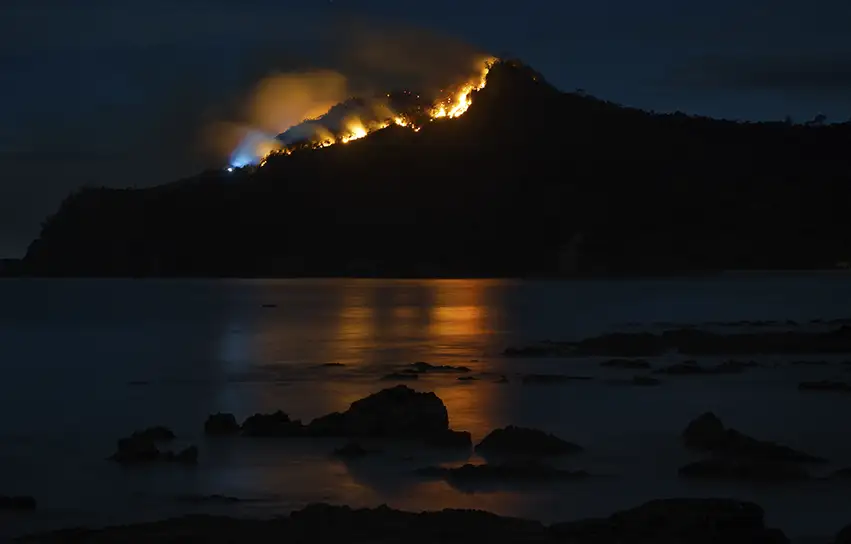
Wildfires are becoming more frequent and intense across Aotearoa, and the consequences are devastating. They tear through native bush and peatlands, threaten endangered species, damage huts and tracks, and erase cultural heritage in minutes. As the climate gets hotter and drier, the risk grows – and so does our responsibility to prevent fires before they start.
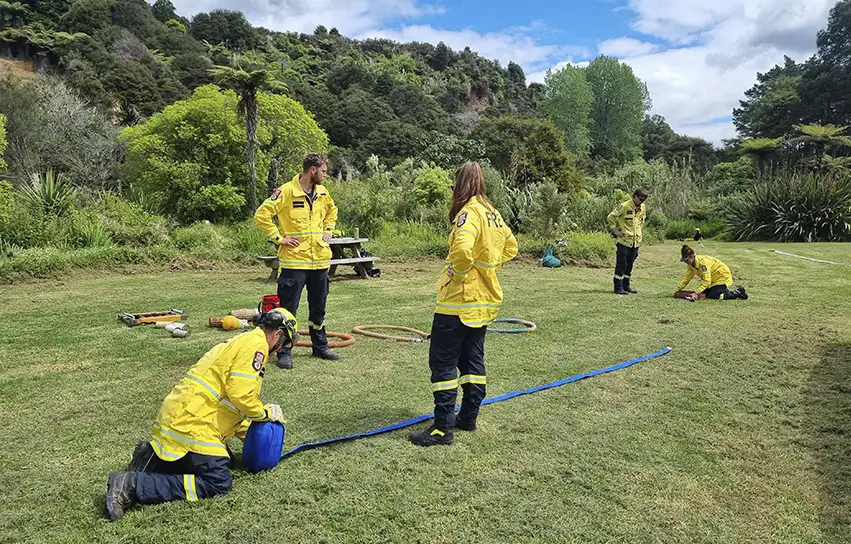
Fire and Emergency New Zealand (FENZ) are the fire authority for all public conservation land. DOC supports FENZ in this function. DOC does this by providing resources, including fire crew, providing advice, or by supporting the fire management.
There is a year-round Restricted Fire Season in place on public conservation land, which means fires can only be lit in certain conditions. It’s your responsibility to check the latest fire safety information on the DOC website and visit www.checkitsalright.nz before lighting a fire.
“One of the issues we have is people discarding hot ashes from charcoal cookers into the forest,” says Karen. “This can cause wildfires, so please use gas cookers instead that can easily be switched off.”
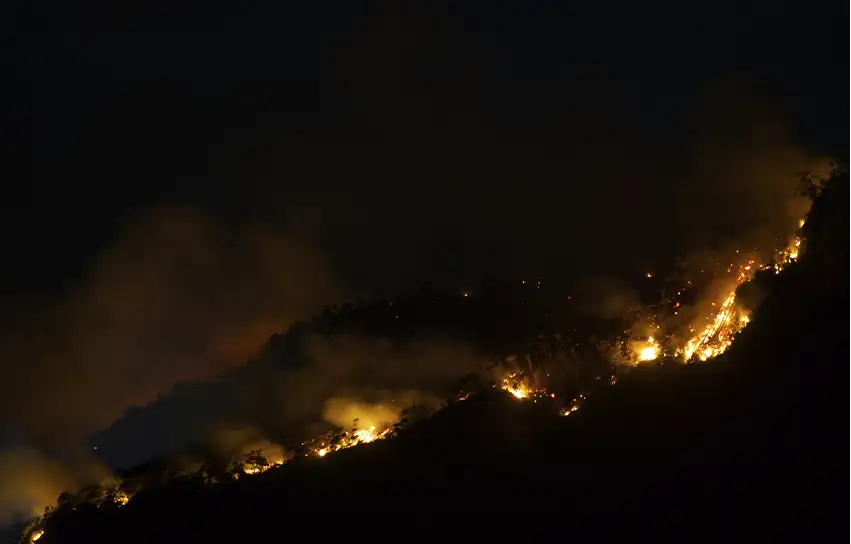
If you are at a campground, you can light fires, but only in designated fireplaces and only when there is no fire ban – always check the fire restrictions and make sure your fire is out before you move on. You can use the fireplaces inside DOC huts at any time.
“We want people to enjoy the outdoors, but to do it responsibly,” says Karen. “Simple things like parking away from dry grass, using ash bins properly, letting cookers cool down and clearing your cooking area of flammable materials can prevent wildfires. Always be aware of your surroundings – especially in dry, windy conditions. It’s about caring for the places we all love.”
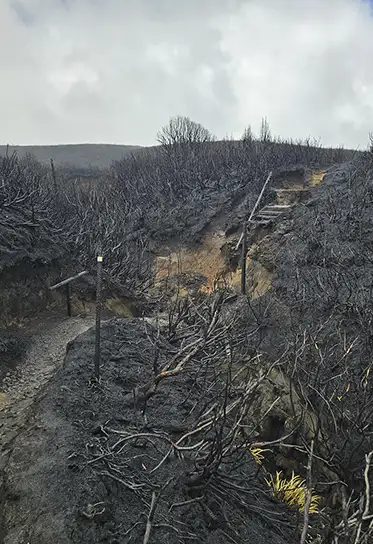
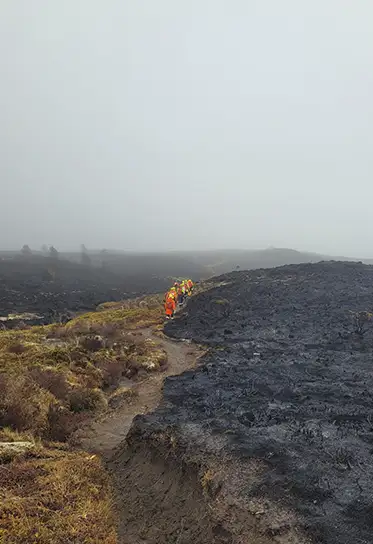
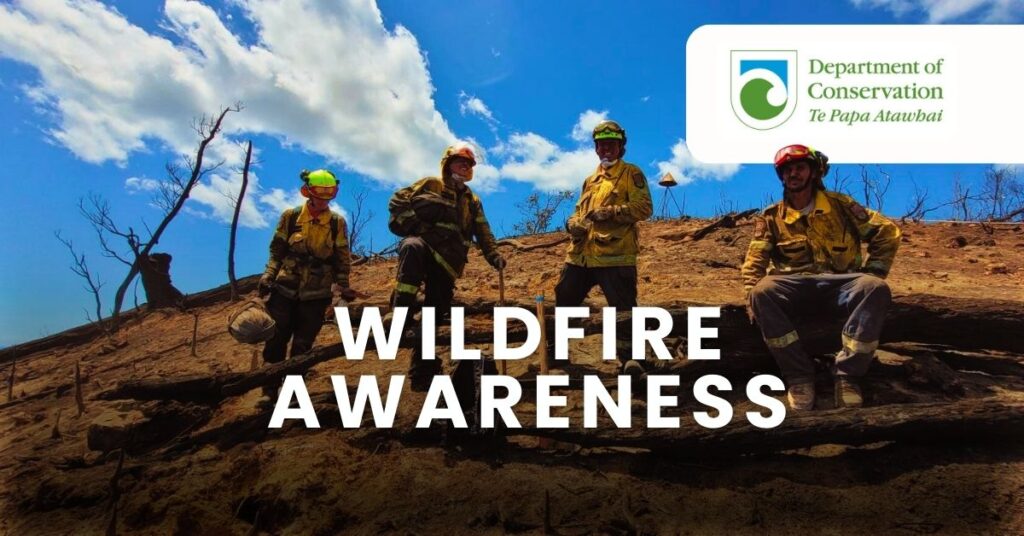
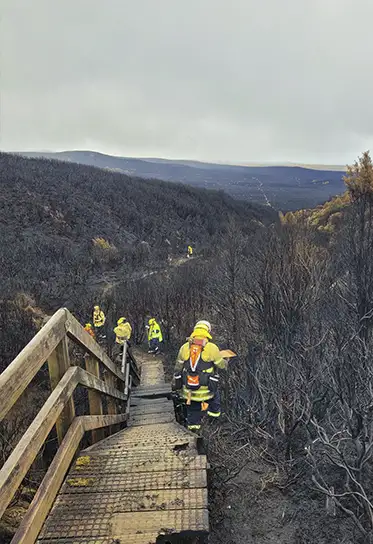
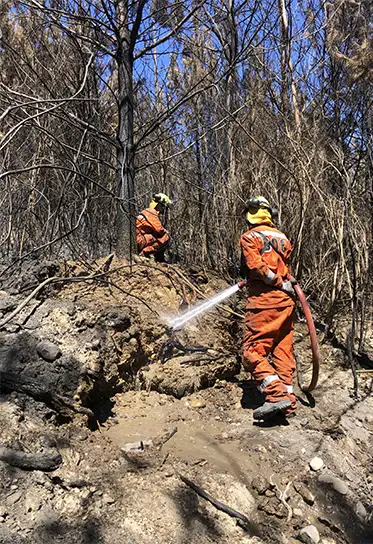
DOC Hauraki Coromandel Firefighters joined the fire response at Tongariro.
While prevention is key, knowing how to respond in an emergency can save lives. If you encounter a wildfire:
- Move quickly away from the fire and call 111. Don’t try to get closer for a photo or to assess the situation.
- Head downhill (unless that is towards the fire). Fire moves faster uphill, so it’s best to escape downhill or across a slope. Avoid hilltops or ridges if you can because that is where the intensity of the fire will be most severe.
- Stay away from grass and scrub, which burn rapidly. Look for roads, clearings, or rocky areas.
- Shelter in the water (a lake, stream or the sea). If you can get to water, crouch or lie in it (if you can safely do so).
- Remove flammable material and shield yourself from the fire’s heat. If you can’t escape from the fire, do what you can to prepare for it to pass you. Find as clear an area as possible (a road or a clearing is best) and remove as much flammable material as possible from around you. The biggest risk during a wildfire is radiant heat – the extreme heat coming off the fire. Try and shield yourself from the heat by finding a large rock, bank or behind a fallen log. You can also shelter in a hollow in the ground. Drink water and cover your mouth with a damp cloth to protect yourself from the smoke.
“Fire prevention isn’t just about safety. It’s about caring for the land and the biodiversity that lives there,” DOC’s Hauraki-Waikato-Taranaki Regional Fire Lead Karen Ismay says.
Wildfires in wetlands have severe impacts on biodiversity, carbon storage, and ecosystem resilience. In 2024, the Whangamarino fire destroyed around 1,000 hectares of raised peatland – a globally rare ecosystem that stores vast amounts of carbon and provides critical habitat for At Risk species such as the pūweto/spotless crake and the Critically Endangered matuku-hūrepo/Australasian bittern and swamp helmet orchid.
Peatlands act as major carbon sinks because their vegetation decomposes extremely slowly, effectively locking carbon in place “as if frozen in time.”
However, when peat soils dry out, they become highly flammable, and fires release large amounts of greenhouse gases, though Whangamarino’s emissions were lower because wet soils didn’t fully ignite. The fire still damaged vegetation layers and critical habitat, causing biodiversity loss that will take decades to recover. Re-wetting wetlands is essential to reduce fire risk, protect carbon stores, and prevent future emissions.
“Our native species and wild places are precious,” Karen says. “By following fire safety guidelines and knowing what to do in an emergency, you’re helping protect them for future generations. Whether you’re camping in the bush, hiking through the backcountry, or staying in a hut, your actions matter. Let’s all do our part to keep nature and ourselves safe.”
For more information on fire safety when naturing, go to:
Coromind: Coromandel’s Collaborative Magazine

Help us take Coromind Magazine to new heights by becoming a member. Click here
Change the Weather for Your Business: Advertise with Us.
Advertise your business in the whole Hauraki Coromandel in the coolest Coromandel Art Magazine, from Waihi Beach/Paeroa /Thames up to the Great Barrier Island.
Advertise Smarter, Not Harder: Get in Touch